
Why Your Furnace Smells Like Burning Dust on First Use
The first genuinely cold morning in East Tennessee tends to play out the same way in every house. You slide the thermostat over to heat, the burners light, and a few minutes later the whole place smells like a hot iron sitting on an old wool blanket. That burning dust smell puts a lot of homeowners on edge, and it should get your attention, but in the large majority of cases it is a completely normal side effect of firing a furnace that has been sitting untouched since early spring. Dust settles on the heat exchanger, the burner assembly, and the blower housing during the long off season, and the first real heat cycle simply cooks it off. The odor usually fades on its own once that layer of dust is gone. Not every burning smell is dust, though, and knowing the difference between a harmless break in odor and a warning sign is what keeps a small annoyance from turning into a dangerous situation. This guide walks through what actually causes the smell inside your equipment, how long it should reasonably last, and the specific odors that mean you should shut the system down and call a technician.
Why Your Furnace Smells Like Burning Dust on the First Use of the Season
The burning dust smell comes from ordinary household debris making contact with metal surfaces that get extremely hot in a very short amount of time. Your furnace does not run for roughly six months out of the year in this part of Tennessee, and during that stretch the interior of the cabinet collects a fine film of dust, pollen, pet dander, carpet fibers, and skin cells. When the burners ignite for the first time in the fall, the heat exchanger surface climbs to several hundred degrees within a couple of minutes, and everything sitting on that surface scorches at once. The blower then kicks on and pushes that scorched odor straight through your supply ducts and out of every register in the house, which is why the smell seems to arrive everywhere at the same moment. It is the same basic reaction you get from dust hitting a hot light bulb or an oven element, only spread across a much larger surface area. Understanding where the dust comes from makes it far easier to reduce the smell next season and to recognize when something other than dust is burning.
How Dust Builds Up Inside Your Furnace and Creates a Burning Dust Smell
Every forced air system in a home is essentially a large vacuum that pulls air out of your living space, runs it across a filter, and pushes it back out again. That filter catches a great deal of debris, but no filter captures everything, and small particles slip past the media and around the edges of the filter rack on their way into the cabinet. Over the course of a spring and summer running air conditioning, thousands of cubic feet of air per minute move through that same equipment, and a measurable amount of fine debris settles out along the way. Gravity and static electricity do the rest, holding that film onto the heat exchanger, the burner shields, the flame sensor, and the blower wheel. Homes with pets, carpet, wood floors that get swept often, or an ongoing remodel see a noticeably heavier layer than homes without those conditions. Rural properties around Ten Mile, Decatur, and Spring City also deal with a heavy pollen season and gravel road dust that finds its way indoors. All of that material sits patiently on cold metal until the day you ask the system for heat.
The filter itself plays a much larger role in this than most homeowners realize, and a neglected filter makes the problem considerably worse. A filter that has been in place since May is loaded with debris, and a loaded filter does not simply stop working; it starts to bypass, meaning air takes the path of least resistance around the frame instead of through the media. That bypassed air carries unfiltered dust directly into the blower compartment and onto the heat exchanger. Filters that are too thin for the application, or the wrong size for the rack, allow the same thing to happen even when they look reasonably clean. Cheap fiberglass panel filters catch large lint and hair but let a great deal of fine particulate through by design. Upgrading to a properly sized pleated filter and changing it on a real schedule cuts down on how much material ever reaches the hot surfaces. That one habit reduces the intensity of the first burn off odor more than almost anything else you can do yourself.
Ductwork contributes its own share of the smell, and it is the part homeowners almost never think about. Supply and return ducts hold years of accumulated dust along their interior walls, especially in flex duct with ribbed inner liners and in older metal trunk lines with rough seams. When the furnace fires and the blower ramps up, that moving air scours some of that settled material loose and carries it toward the registers. Some of it lands back on warm components near the plenum, where it scorches on contact. Homes with return ducts that pull from a dusty crawl space, attic, or garage will always run dirtier than homes with fully sealed return paths. Leaky return duct joints are a common culprit in older houses across Roane, Meigs, and Rhea counties, and they act like open straws pulling in unfiltered air. Sealing those returns and clearing the interior of the duct system attacks the dust problem at its source rather than at the furnace.

What Happens During the First Furnace Cycle That Creates the Burning Dust Smell
A gas furnace goes through a precise startup sequence, and each step of that sequence contributes to the odor you notice. When the thermostat calls for heat, the inducer motor spins up first to clear the flue and prove draft through the pressure switch. The igniter then glows or sparks, the gas valve opens, and the burners light and push flame into the heat exchanger tubes. Metal surfaces that were sitting at room temperature a moment earlier climb past three hundred degrees very quickly, and organic material resting on that steel begins to oxidize immediately. That reaction releases the sharp, slightly acrid odor people describe as hot dust or scorched lint. The furnace intentionally waits before starting the blower so it does not push cold air into the house, which means the odor concentrates inside the cabinet during those first thirty to ninety seconds.
Once the fan delay expires, the blower starts and everything changes at once. Now several hundred to well over a thousand cubic feet of air per minute sweep across those hot surfaces and out into the duct system. The odor that had been building inside the cabinet is delivered to every room in the house within a minute or two, which is why the smell feels sudden and strong even though the actual amount of burning dust is very small. Air moving across the blower wheel also lifts dust that has caked onto the individual fan blades over the summer. Some of that material passes near the warm plenum area and adds to the odor. The smell tends to peak during the first cycle and drop noticeably on the second and third cycles as the supply of loose dust runs out. That declining pattern is one of the clearest signs you are dealing with ordinary burn off rather than a mechanical problem.
Secondary components add their own faint contribution during that first run, and it is worth knowing they are part of the picture. Wiring insulation, the blower motor windings, and various plastic components inside the cabinet all warm up for the first time in months and release a very light odor of their own as they reach operating temperature. A brand new furnace or a furnace with recently replaced parts will do this more noticeably during its first several heating cycles, because manufacturing oils and coatings burn off along with the dust. On systems installed inside a garage or an unconditioned crawl space, whatever else is stored nearby also contributes to what you smell coming from the registers. None of this is dangerous on its own as long as the odor stays faint and fades quickly. The moment any of those secondary smells becomes strong, sharp, or persistent, the situation changes entirely and the system should be shut down. That distinction is covered in detail in the next section.
How Long the Burning Dust Smell From a Furnace Should Last
A normal burn off odor is short lived, and duration is the single most useful test a homeowner has. In most homes the smell noticeably weakens after fifteen to twenty minutes of run time and is essentially gone within an hour of total operation. If your furnace short cycles because the outdoor temperature is mild, the burn off may stretch across the first day or two simply because the equipment has not accumulated enough total run time to clear everything. Systems that sat idle for a very long stretch, or that live in especially dusty homes, occasionally need a few hours of cumulative operation before the odor disappears completely. What matters is the trend line: each cycle should smell weaker than the one before it. An odor that holds steady at the same intensity, or gets stronger over several days, is telling you something else is going on.
You can help the process along with a few simple steps that cost nothing. Install a fresh filter before the first heating cycle so the system is not pulling loose debris through a loaded one. Crack a couple of windows for the first twenty or thirty minutes of operation to give the odor somewhere to go instead of settling back into the house. Wipe down visible return grilles and supply registers, since those surfaces collect a surprising amount of dust and sit directly in the airflow path. Vacuum any accessible dust from around the base of the furnace and from the floor of the closet or mechanical room. If you have the option, run the first heat cycle on a mild fall afternoon rather than waiting for the first freezing night, so you are dealing with the odor on your own schedule. Homeowners who do a deliberate test run in September or early October almost never get caught off guard.
There is one important thing the burning dust smell does not tell you, and it deserves to be stated plainly. Carbon monoxide has no odor at all, so a smell of any kind is never how you detect it, and the absence of a smell is never proof that a furnace is safe. Every home with gas or propane appliances needs working carbon monoxide detectors on each level, ideally near sleeping areas, tested at the start of every heating season. Detectors have a finite service life, typically five to ten years depending on the model, and an expired unit gives you a false sense of security. A cracked heat exchanger can allow combustion gases to mix with the air your blower distributes, and that failure can exist in a furnace that smells perfectly normal. Annual inspection of the heat exchanger by a technician is the only reliable way to catch that problem early. Want your system checked before the cold really sets in? Click here for our furnace maintenance service.
When a Furnace Burning Smell Is Not Dust and Needs a Repair
Not every burning odor coming out of your vents deserves the benefit of the doubt, and a few of them require you to stop and act immediately. The clues are in the character of the smell, how long it lasts, and what else the furnace is doing while it happens. Burning dust is dry, faintly metallic, and fades. Burning plastic, hot electrical insulation, rubber, oil, or the sharp sulfur odor of raw gas are all completely different signals, and none of them resolve on their own. Any of those odors paired with unusual sounds, visible smoke, tripped breakers, or a furnace that keeps shutting itself down calls for professional attention rather than patience. The sections below break down the three categories that matter most so you can tell quickly which one you are dealing with.
Burning Plastic or Electrical Smells From a Furnace Are Not Burning Dust
An odor of melting plastic or hot electrical insulation is one of the most serious things you can smell from a furnace, and it should never be waited out. That smell typically comes from overheated wiring, a failing blower motor, a shorted control board, a swollen run capacitor, or a loose connection at a terminal that is arcing under load. Loose electrical connections generate significant heat at the point of contact and slowly cook the insulation around the conductor, producing an odor that many people describe as fishy or chemical rather than dusty. Failing blower motors get hot enough to scorch their own windings, and a motor pulling high amperage will smell hot long before it fails outright. Rodents are another common cause in rural properties, since they nest inside warm cabinets and chew wire insulation down to bare copper. Any of these conditions can progress to a fire, and none of them get better with time.
The correct response is simple and immediate. Shut the furnace off at the thermostat, then cut power at the dedicated disconnect switch or the breaker in the panel so the system cannot restart on its own. Do not keep running the equipment to see if the smell fades, and do not reset a breaker that has tripped in order to get heat back. If you see smoke, get everyone out of the house and call the fire department before anything else. Once power is off and the situation is stable, the system needs a technician who can open the cabinet, check amp draw on the motor, inspect every wire termination, and test the control board and capacitor under real load. Replacing a scorched wire without finding out what caused it to overheat leaves the underlying fault in place.
Older furnaces with belt driven blowers can also produce a distinctly rubbery burning smell that is separate from electrical trouble. A slipping or misaligned belt generates friction heat against the pulley and gives off exactly the odor you would expect. That symptom usually arrives with a squealing or chirping sound during blower operation. Direct drive blowers, which are far more common now, do not have belts, but their motor bearings can dry out and seize, producing heat, noise, and odor together. Bearings that are failing often groan or hum in a way that changes pitch as the motor comes up to speed. Catching a motor before it locks up is much cheaper than replacing it after it takes the control board with it. Smelling burning plastic or hot wiring right now? Click here for our 24/7 emergency HVAC service.

A Gas or Rotten Egg Smell From a Furnace Is Never Burning Dust
Natural gas and propane are both naturally odorless, so utility suppliers add a chemical called mercaptan that produces a strong rotten egg or sulfur smell specifically so leaks can be detected by nose. If you smell that odor anywhere in your home, treat it as a genuine emergency and act immediately rather than investigating. Do not flip light switches, do not unplug anything, do not use a phone inside the house, and do not light a match or a lighter to check anything. Get everyone and every pet outside and away from the structure, then call your gas supplier and the fire department from a safe distance. A small leak at a fitting, a failing gas valve, or a cracked flexible connector can all release enough gas to create a hazard in an enclosed mechanical closet. Ventilation and professional testing are the only safe path forward.
Propane behaves differently from natural gas in a way that matters a great deal for homes in this region. Propane is heavier than air, so it sinks and collects in low areas such as crawl spaces, basements, floor drains, and sunken utility rooms. That means a propane leak may not be noticeable at nose level even when a dangerous concentration exists a few feet lower. Many rural properties around Ten Mile, Kingston, and Decatur run on propane, and those systems deserve extra care during the first startup of the season. Have the tank, regulator, supply line, and every connection at the appliance checked when the system is serviced. Any lingering odor near the floor in a mechanical space warrants a call even after the obvious smell clears.
A smoky, oily, or sooty smell falls into its own category and points toward a combustion problem rather than a fuel leak. Dirty or misaligned burners can produce incomplete combustion, which leaves soot on the burner faces and inside the heat exchanger and gives off an unmistakable smoky odor. A blocked or partially collapsed flue prevents combustion gases from venting properly, which is dangerous for reasons that go well beyond the smell. Flame rollout, where flame escapes forward out of the heat exchanger opening instead of drawing inward, scorches the front of the burner compartment and often trips a safety switch. Bird nests, wasp nests, and debris in the flue are common findings on systems that sat unused all summer. Any smoky odor from a gas appliance should shut the system down until a technician verifies safe combustion and proper venting.
A Furnace Burning Smell That Keeps Returning Points to an Airflow Problem
When a hot or scorched smell shows up every single time the furnace runs, weeks into the heating season, the issue is almost always restricted airflow. Furnaces are engineered to move a specific volume of air across the heat exchanger, and manufacturers publish a temperature rise range, usually somewhere between thirty and seventy degrees depending on the model. Restrict that airflow and the temperature rise climbs above the design range, meaning the heat exchanger runs hotter than it was ever meant to. Hotter metal scorches airborne dust continuously instead of just once, which produces an odor that never fully goes away. It also stresses the heat exchanger itself, accelerating metal fatigue and increasing the risk of cracking over time. A furnace that repeatedly overheats is a furnace on a shortened lifespan.
The usual causes of that restriction are straightforward and mostly preventable. A clogged filter is the most common by far, followed by closed or blocked supply registers, closed return grilles, furniture or rugs sitting over floor vents, and crushed or disconnected flex duct in a crawl space or attic. A blower wheel caked with dust loses a substantial percentage of its capacity, because the buildup changes the shape of each blade and the wheel can no longer grab air efficiently. Undersized ductwork is another frequent finding, particularly in homes where a larger furnace was installed onto duct that was sized for the original smaller unit. Dirty evaporator coils sitting above the furnace also choke airflow, and that coil is easy to forget because it belongs to the cooling side of the system. Each of these problems is fixable, and most of them are inexpensive compared to what they cost you in efficiency and equipment life.
Overheating produces a second symptom that homeowners notice even when they cannot identify the smell. The high limit switch, which is a safety device that monitors temperature inside the furnace, will shut off the burners while leaving the blower running to cool things down. The result is a furnace that fires for a few minutes, quits, blows cool air, then fires again a short while later without ever satisfying the thermostat. That pattern is called short cycling, and it drives up gas usage, wears out the igniter and gas valve, and leaves rooms uncomfortable. Repeated limit trips are the furnace protecting itself from a condition you need to correct. Restoring proper airflow usually eliminates the odor and the short cycling at the same time. Curious what other furnace symptoms are telling you? Click here for our furnace repair service.
Why You Need a Furnace Tune Up Before the First Burning Dust Smell of the Season
The best way to handle a burning dust smell is to deal with it on your terms in early fall rather than at eleven o’clock on the first freezing night. A professional tune up removes the dust before it ever has a chance to scorch, verifies that every safety component works, and confirms the system is moving the right amount of air across the heat exchanger. It also catches the problems that produce dangerous odors, including cracked heat exchangers, loose electrical connections, blocked flues, and gas leaks at fittings. Homeowners across Meigs, Roane, Rhea, and Loudon counties who schedule service in September and October consistently avoid the emergency calls that fill up December. Preventive service costs a fraction of a heat exchanger replacement and takes an afternoon instead of a week of waiting for parts.
What a Furnace Tune Up Does About the Burning Dust Smell
A real furnace tune up starts with cleaning the components where dust actually accumulates. The technician removes and cleans the burner assembly, brushes and vacuums the heat exchanger surfaces, cleans the flame sensor so it reads properly, and clears debris from the blower compartment and blower wheel. That single step eliminates most of the material that would otherwise burn off in your living room air. A new filter goes in, and the technician confirms the filter size and type actually fit the rack without bypass. What remains after that service is a very brief and mild odor instead of a strong one that hangs around for days.
The safety portion of the visit is where the real value sits. The heat exchanger gets inspected for cracks, rust, and separation at the seams, since that component is the barrier between combustion gases and the air you breathe. Gas pressure gets measured at the manifold and adjusted to the manufacturer specification, because overfiring produces excess heat and underfiring wastes fuel. The technician tests the high limit switch, the rollout switches, the pressure switch, and the flame sensor to confirm each one shuts the system down when it should. The flue and vent connections get checked for blockage, corrosion, and proper slope, and combustion gases get analyzed for carbon monoxide.
Performance testing rounds out the appointment and directly addresses the airflow issues that cause recurring odors. Measuring temperature rise across the furnace tells the technician immediately if airflow is restricted, since a rise above the rated range means the equipment is running hotter than designed. Static pressure readings identify duct restrictions and undersized returns that no amount of filter changing will fix. Motor amperage gets compared against the nameplate rating to catch a motor that is working harder than it should. Electrical connections get tightened, and the capacitor gets tested under load rather than just visually inspected. All of that information gets you a system that runs cooler, quieter, and cheaper through the winter.
How Air Duct Cleaning Cuts Down the Burning Dust Smell From Your Furnace
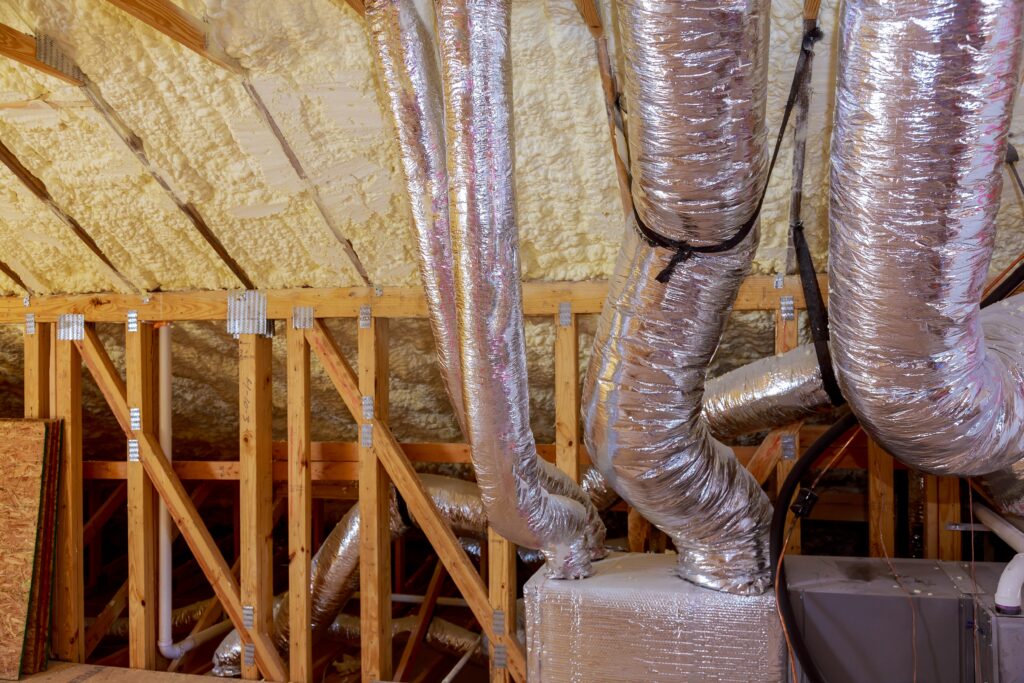
Cleaning the furnace addresses the equipment, but the duct system holds far more dust than the cabinet does. A typical home has hundreds of feet of supply and return duct, and the interior surfaces of those runs collect years of settled debris that gets stirred up every time the blower starts. Professional duct cleaning uses negative pressure and agitation tools to pull that material out rather than pushing it around. Homes with pets, allergy sufferers, recent construction, or visible dust discharge at the registers benefit the most. Removing that reservoir of debris reduces both the intensity and the duration of any burn off odor.
Duct cleaning also gives a technician the chance to find problems you cannot see from inside the house. Disconnected duct runs in crawl spaces are extremely common in older East Tennessee homes, and a disconnected supply is heating your crawl space instead of your bedroom. Return leaks pull unfiltered air, insulation fibers, and moisture directly into the system, which feeds the dust problem continuously no matter how often you change the filter. Crushed flex duct restricts airflow enough to cause the overheating and recurring odor described earlier. Rodent activity, mold growth from condensation, and deteriorated internal liner all show up during a thorough inspection.
The improvement shows up in more than just the smell. Sealed and cleaned ductwork delivers a larger percentage of the air your furnace actually produces to the rooms where you want it, which means shorter run times and lower gas bills. Rooms that never quite kept up with the rest of the house often improve dramatically once a disconnected or crushed run gets repaired. Filters last longer when the return side is sealed, and the blower wheel stays cleaner between services. Homeowners dealing with persistent dust settling on furniture usually notice a real difference within a few weeks. Ready to clear the dust out of your system for good? Click here for our air duct cleaning service.
Why Choose Affordable AC and Service for Furnace Burning Smell Problems
Affordable AC and Service has been keeping Tennessee homes comfortable for more than thirty five years, and we work on the same systems in the same conditions our neighbors deal with every winter. We are based at 158 Hickory Ln in Ten Mile and serve Spring City, Decatur, Dayton, Kingston, Rockwood, Loudon, Lenoir City, Farragut, Tellico Village, Sweetwater, Etowah, and Crossville. Our technicians diagnose the actual cause of a burning smell instead of guessing, because a scorched wire and a dirty heat exchanger call for very different repairs. We were recognized as the number one HVAC contractor in Meigs County for 2025, and we take that standing seriously on every call. Estimates are free on all services, so you know the cost before any work begins.
We stand behind our work with warranty coverage that is genuinely uncommon in this trade. Repairs carry a five year labor warranty, and new installations carry a fifteen year labor warranty, which means we are accountable for the quality of our workmanship for a very long time. Financing options are available for homeowners facing an unexpected replacement in the middle of the season. Furnace problems do not keep business hours, so we run 24/7 emergency service for gas odors, no heat calls, and anything that smells like it is burning. Our goal on every visit is a system that runs safely, not just one that runs.
Getting your furnace inspected before the first hard freeze is the simplest thing you can do to avoid a cold house and a bigger repair bill. A tune up removes the dust, verifies the safeties, and gives you a clear picture of what your equipment needs this winter. If your furnace is already smelling like something more serious than dust, shut it down and let us take a look before you run it again. Call us at (423) 800-2029 or email info@affordableacservice.com to get on the schedule. We will get your heat working right and keep it that way through the coldest weeks of the year.