
What a Pre Winter HVAC Inspection Actually Covers
Most homeowners in Meigs County book a heating tune up without ever knowing what the technician is doing inside the cabinet, and that gap in understanding is exactly why so many people skip the appointment altogether. A pre winter HVAC inspection is not a quick glance at the thermostat and a new filter on the way out the door. It is a structured evaluation of combustion, airflow, electrical safety, refrigerant performance, venting, and controls, and each of those categories has measurable pass or fail standards written by the equipment manufacturer. When a technician performs the inspection correctly, they leave behind numbers, not opinions, including temperature rise across the heat exchanger, static pressure in the duct system, microfarad readings on the capacitors, and carbon monoxide levels in the flue. Those numbers tell you if your system will survive a January cold snap or leave you calling for emergency service at two in the morning. Tennessee winters swing hard between mild afternoons and hard freezes, which puts stress on equipment that sat idle through a long humid summer. The following guide walks through what a real pre winter HVAC inspection includes, why each step matters, and what your technician should be able to show you when the visit is finished.
What a Pre Winter HVAC Inspection Covers Inside Your Heating System
The heart of any pre winter HVAC inspection happens inside the furnace or air handler cabinet, where combustion, ignition, and safety controls all have to work together in a specific sequence. A gas furnace runs through roughly seven distinct stages every time it fires, starting with a call for heat and ending with a post purge, and a failure at any point in that chain shuts the whole system down. Technicians check each stage individually rather than assuming a successful startup means everything is healthy, because a furnace can light perfectly and still be operating outside of safe parameters. Heat pumps follow a different sequence involving reversing valves, defrost boards, and auxiliary heat strips, but the principle stays the same. The inspection should confirm that safety devices are functional and not bypassed, that combustion is clean, and that the equipment is producing heat within the range printed on the data plate. Skipping this portion of the inspection is how small problems turn into cracked heat exchangers, failed compressors, and repair bills that dwarf the cost of maintenance.
The Pre Winter HVAC Inspection Checklist for Burners and Heat Exchangers
Burner inspection begins with a visual assessment of the flame itself, which should burn a steady blue with a sharp defined cone and no yellow tipping, rolling, or lifting off the burner ports. Yellow or lazy flames point to incomplete combustion, and incomplete combustion produces carbon monoxide, so this observation carries real safety weight rather than being a cosmetic check. Technicians pull and clean the burners when rust flakes, spider webs, or scale have partially blocked the ports, since a restricted port starves that section of the burner and pushes the flame pattern out of shape. The flame sensor gets attention during the same step because a thin layer of silicon oxide builds on the rod over a season of operation and weakens the microamp signal the control board reads. When that signal drops below the manufacturer threshold, usually somewhere between 0.5 and 1.5 microamps depending on the board, the furnace lights and then shuts down within a few seconds. Cleaning the rod with a fine abrasive pad and verifying the microamp reading with a meter takes only a few minutes but prevents one of the most common no heat calls in the region. A good technician records that reading so you can compare it next season.
Heat exchanger evaluation is the single most important safety item in the entire pre winter HVAC inspection, and it deserves more than a flashlight pointed into the cabinet. The heat exchanger separates combustion gases from the air your family breathes, and metal that expands and contracts through thousands of heating cycles eventually develops stress cracks along the bends and welds. Technicians inspect the accessible surfaces visually, then look for indirect evidence such as flame disturbance when the blower engages, soot deposits, corrosion streaking, or elevated carbon monoxide readings in the supply air. Camera inspection through the burner ports gives a clearer view of the primary sections on most modern furnaces. On condensing furnaces with secondary stainless steel exchangers, the technician also checks the condensate path, since acidic condensate that sits in a clogged trap will eat through the coil and the drain assembly over time. A confirmed breach means the furnace comes out of service, and there is no partial credit or temporary workaround on that decision. Affordable AC & Service documents these findings in writing so homeowners understand exactly what was found and why.
Gas pressure and combustion quality round out the burner portion of the inspection, and both require instruments rather than judgment. Manifold pressure on a single stage natural gas furnace typically runs near 3.5 inches of water column, while propane systems run closer to 10 or 11 inches, and the exact target appears on the equipment data plate. Pressure that drifts high overfires the furnace and overheats the exchanger; pressure that drifts low starves the burners and drops heating capacity when you need it most. Technicians verify inlet pressure as well, because a partially failed regulator or an undersized gas line shows up as a pressure drop the moment the burners light. Combustion analysis with a calibrated analyzer measures carbon monoxide, oxygen, and stack temperature in the flue, giving a direct picture of how cleanly the furnace is burning fuel. Air free carbon monoxide readings above roughly 100 parts per million in the flue signal a combustion problem that needs correction before the season starts. These measurements take about fifteen minutes and are the difference between a real inspection and a sales visit. Need a full heating tune up before the first freeze? Click here for our furnace maintenance service.

A Complete Pre Winter HVAC Inspection of Electrical Controls and Safety Switches
Electrical inspection covers every component that tells the furnace when to start, when to stop, and when to shut itself down for safety, and these parts fail quietly until the moment they are needed. The limit switch protects the heat exchanger by cutting the gas valve if supply air temperature climbs past a set point, which usually happens because of a dirty filter or a failing blower. Rollout switches sit above the burner compartment and trip when flames roll backward out of the exchanger, a condition that indicates blockage or venting failure. Pressure switches confirm that the inducer motor is actually moving air through the flue before the control board allows ignition. Technicians test each of these devices for continuity and correct operation instead of assuming they work because the furnace ran. Bypassed or jumpered safeties show up more often than most homeowners would expect, usually left behind by a previous repair that was never finished properly.
Capacitors, contactors, and motors carry the mechanical load, and their condition can be measured with a meter rather than guessed. A run capacitor rated at 45 microfarads should test within about six percent of that value, and a reading that has drifted to 38 or 40 means the motor is drawing more current than it should and running hotter than designed. Contactors develop pitting and carbon buildup on the contact points, which creates resistance, heat, and eventually a welded contactor that will not release. Blower motor amperage gets compared against the full load amp rating on the motor tag, since a motor pulling above nameplate is either fighting a restriction or heading toward failure. Inducer motors get the same treatment, along with a check for bearing noise and excessive play in the shaft. Replacing a twelve dollar capacitor in October is a very different experience than replacing a compressor in January because that capacitor failed. Technicians should show you the readings on the meter rather than simply telling you a part is weak.
Ignition components and control board diagnostics finish this section of the pre winter HVAC inspection. Hot surface igniters are tested for resistance, with most silicon carbide models falling in a range near 40 to 90 ohms and most silicon nitride models reading much higher, and an igniter drifting out of range is on borrowed time. Technicians also inspect the igniter for hairline cracks and for carbon deposits that indicate improper burner alignment. Control boards store fault history, and pulling those stored codes reveals problems the homeowner never noticed, such as repeated ignition retries or intermittent pressure switch faults during high wind. Wiring gets a visual and physical check for loose terminals, rodent damage, heat discoloration, and corrosion at connection points, all of which are common in crawlspace installations across East Tennessee. Grounding and polarity are verified because flame rectification depends on a solid ground path, and a poor ground creates ignition failures that look like a bad sensor. Documenting these findings gives you a baseline for the years ahead.
The Pre Winter HVAC Inspection Steps for Heat Pumps and Defrost Cycles
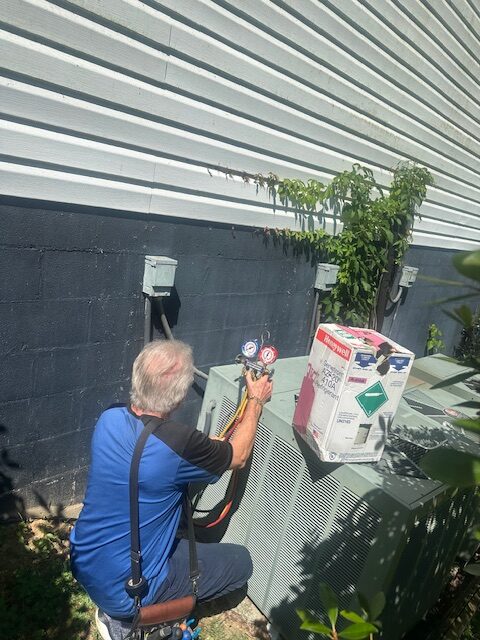
Heat pumps are the dominant heating choice across much of Roane, Loudon, and Meigs County, and they require a different set of pre winter HVAC inspection steps than a gas furnace. The reversing valve is the component that flips the system from cooling to heating, and a valve that sticks partway leaves the system blowing lukewarm air while the compressor works at full load. Technicians verify proper changeover by measuring line temperatures on both sides of the valve and confirming the solenoid energizes on the call for heat. Refrigerant charge is checked using superheat or subcooling depending on the metering device, because a heat pump that is even slightly undercharged loses a disproportionate amount of capacity once outdoor temperatures fall into the thirties. Charge cannot be judged by pressure alone in heating mode, which is why the measurement has to be done properly with temperature clamps and an accurate gauge set. A heat pump that cooled adequately in August can still fail to heat adequately in December.
Defrost operation gets tested directly rather than assumed, since frost accumulation on the outdoor coil is normal and the system needs a working defrost cycle to shed it. The defrost board initiates a cycle based on time and temperature input from a coil sensor, briefly reversing the system and energizing auxiliary heat so the indoor air does not turn cold. Technicians force a defrost cycle during the inspection and watch the full sequence, confirming the outdoor fan stops, the reversing valve shifts, auxiliary heat engages, and the system terminates the cycle at the correct coil temperature. A stuck defrost cycle wastes enormous amounts of electricity; a defrost cycle that never initiates lets the coil ice into a solid block and can damage the compressor. Outdoor unit placement matters here as well, and units sitting flat on the ground rather than elevated on risers will refreeze in their own meltwater. The coil itself gets cleaned of leaves, grass clippings, and cottonwood so air can move through the fins during heating operation.
Auxiliary and emergency heat strips deserve their own attention because they carry the load when outdoor temperatures fall below the balance point of the system. Electric resistance heat elements are checked for continuity, amperage draw, and proper sequencer operation, since a burned out element cuts your backup capacity in half without triggering any alarm. Technicians verify that the strips stage on correctly and, just as importantly, that they are not running when they should not be, because a stuck sequencer or a miswired thermostat can run resistance heat alongside the compressor and triple an electric bill. Crankcase heaters are inspected on systems that use them, as an unheated crankcase allows refrigerant to migrate into the compressor oil during cold standby periods. Disconnect boxes, breakers, and wire terminations are checked for heat damage, which is common on circuits carrying twenty or thirty amps of resistance heat. Homeowners who see their winter power bill spike without a corresponding drop in outdoor temperature are usually looking at an auxiliary heat problem that a pre winter inspection would have caught. Running a heat pump this winter? Click here for our heat pump maintenance service.
What a Pre Winter HVAC Inspection Covers Beyond the Equipment Cabinet
A furnace or heat pump can test perfectly and still deliver poor comfort if the air distribution system is working against it, which is why a thorough pre winter HVAC inspection extends well past the equipment itself. Airflow is the single most overlooked variable in residential heating, and roughly half of the systems technicians encounter are moving less air than the manufacturer requires. Restricted airflow raises temperature rise across the heat exchanger, shortens equipment life, trips limit switches, and reduces heat pump capacity at the exact moment you need it. Ductwork in crawlspaces and attics loses heat to unconditioned space, and leaks in the return side pull in dust, humidity, and combustion byproducts. Thermostats add another layer of complexity, especially on heat pump systems where staging and emergency heat settings determine how much you spend to stay warm. Venting and combustion air complete the picture, since a furnace needs a reliable path for exhaust gases and a reliable supply of fresh air to burn correctly.
The Pre Winter HVAC Inspection of Air Filters and Blower Airflow
Filters get changed constantly and understood rarely, and the wrong filter causes more heating problems than most homeowners realize. A one inch pleated filter with a very high MERV rating creates significant resistance, and in a duct system that was already marginal, that resistance drops airflow below what the furnace needs to operate safely. Technicians measure total external static pressure across the air handler using a manometer, comparing the reading against the maximum listed on the equipment data plate, which on most residential systems sits near 0.5 inches of water column. Systems commonly measure at 0.8 or 1.0 inches, meaning the blower is fighting roughly double the resistance it was designed for. Splitting that measurement into filter drop, coil drop, supply drop, and return drop tells the technician exactly where the restriction lives. That diagnostic takes only a few minutes and turns a vague complaint about weak airflow into a specific correctable problem. The recommendation that follows might be a different filter, a larger filter cabinet, an added return, or a coil cleaning.
The blower wheel itself accumulates a layer of dust and grease on the individual fins, and a loaded wheel loses a surprising amount of capacity even while the motor sounds completely normal. Each fin on a forward curved wheel is designed to scoop a specific volume of air, and buildup rounds off that profile until the wheel is essentially slipping through the air rather than moving it. Technicians pull the blower assembly when buildup is visible, clean the wheel thoroughly, and check the housing and motor mounts while the assembly is out. Belt driven blowers on older equipment get belt tension and pulley alignment checked at the same time. Variable speed ECM motors are inspected for correct programming, since a module set to the wrong tap or the wrong profile will deliver the wrong airflow for the installed capacity. Bearing condition and shaft play are checked by hand, because a failing bearing gives plenty of warning before it seizes if anyone bothers to listen for it.
Temperature rise ties the airflow measurements back to real world performance and gives a clear pass or fail number. Every gas furnace lists an acceptable temperature rise range on its data plate, commonly something like 30 to 60 degrees or 35 to 65 degrees, and the technician measures supply and return air temperatures to confirm the system falls inside that window. A rise above the listed maximum means airflow is too low, the exchanger is running hotter than designed, and the limit switch will eventually start cycling the burners. A rise below the listed minimum means airflow is too high, the furnace is underfiring, or condensation may form in a non condensing exchanger. Correcting temperature rise usually involves adjusting blower speed, improving return capacity, or resolving a restriction found during the static pressure test. On heat pumps, the technician compares supply air temperature against outdoor conditions to confirm the system is producing the expected heat output. These measurements are quick, repeatable, and impossible to fake, which is exactly why they belong in every pre winter HVAC inspection.

A Pre Winter HVAC Inspection of Ductwork, Registers, and Return Air
Duct systems in this part of Tennessee frequently run through vented crawlspaces, unconditioned attics, and garages, all of which sit close to outdoor temperature during a cold snap. Insulation on flexible duct is commonly rated around R6 or R8, and a supply run traveling forty feet through a thirty degree crawlspace loses meaningful heat before the air ever reaches a register. Technicians inspect duct insulation for compression, tears, disconnected sections, and vapor barrier damage, all of which reduce effective R value dramatically. Flex duct that sags between supports or takes sharp turns adds resistance and cuts delivered airflow to the rooms at the end of the run. Metal trunk lines are checked at seams and takeoffs, since duct tape applied years ago has almost certainly dried out and let go. Sealing with mastic and proper mechanical fasteners is the durable fix and pays for itself quickly in reduced runtime.
Return air is the half of the duct system that nobody thinks about, and undersized returns are extremely common in homes built before the mid nineties. A system needs a balanced path back to the air handler, and when the return is too small, the blower creates high negative pressure that pulls air from crawlspaces, wall cavities, and attics through every available gap. That infiltration brings dust, moisture, insulation fibers, and sometimes combustion byproducts into the air you breathe. Technicians measure return static pressure, count return openings, and check for closed or blocked returns behind furniture. Homes with a single central return and closed bedroom doors develop pressure imbalances that make some rooms cold and drafty regardless of how well the furnace performs. Adding a return, installing transfer grilles, or undercutting doors resolves the imbalance at modest cost.
Register and supply distribution issues surface during the same portion of the inspection. Technicians verify that supply registers are open, unobstructed, and actually delivering air, then compare room temperatures against the thermostat setpoint to identify rooms that fall behind. Dampers in the trunk line get checked and adjusted, since a damper closed for summer balancing will starve a room in winter. Air leakage at boot connections where duct meets floor or ceiling is a frequent source of loss, and sealing those joints improves both comfort and efficiency. Accumulated dust and debris inside the duct system reduce airflow and circulate through the house every time the blower starts. Homes with visible dust discharge from registers, persistent allergy complaints, or a history of construction work usually benefit from a professional cleaning before the heating season locks the windows shut for four months. Concerned about dust and airflow in your duct system? Click here for our air duct cleaning service.
The Pre Winter HVAC Inspection of Thermostats, Venting, and Combustion Air
Thermostat evaluation goes deeper than replacing the batteries, particularly on heat pump systems where configuration errors quietly cost hundreds of dollars per winter. Technicians confirm the thermostat is set for the correct equipment type, that stage differentials are appropriate, and that auxiliary heat is locked out until it is genuinely needed. A thermostat configured for a conventional furnace but wired to a heat pump can energize emergency heat on every call, which means resistance strips carry the entire load while the compressor sits idle. Setback programming is reviewed as well, since deep nighttime setbacks on a heat pump often trigger auxiliary heat during recovery and erase the savings the setback was supposed to create. Calibration is verified by comparing the thermostat reading against a calibrated instrument at the same location. Placement matters too, as a thermostat mounted on an exterior wall or in direct sunlight will misread the actual room temperature and short cycle the equipment.
Venting inspection protects the household from the most serious risk associated with combustion heating. Technicians examine the entire vent path from the furnace to the termination, checking for correct slope, proper support, secure joints, and adequate clearance from combustible materials. Category I furnaces vented into masonry chimneys are checked for liner condition, blockage, and evidence of condensation damage, which is common when an older chimney serves a newer higher efficiency appliance. Condensing furnaces vented with PVC get checked for sagging runs that trap condensate, disconnected joints, and terminations blocked by leaves, nests, or snow drifts. A spillage test at the draft hood confirms that combustion gases are actually leaving the building rather than backdrafting into the living space. Ambient carbon monoxide readings taken throughout the mechanical room and nearby living areas provide a final confirmation that the appliance is venting safely.
Combustion air availability is the last piece and one that changes as homes get tighter. A gas furnace consumes a substantial volume of air during operation, and modern weatherization, new windows, and added insulation can reduce natural infiltration below what the appliance requires. Technicians evaluate the volume of the space housing the appliance, count other combustion appliances such as water heaters, and confirm that required combustion air openings are present and unobstructed. Furnaces installed in small closets or tight mechanical rooms often need dedicated ducted combustion air, and that requirement is frequently missed during remodels. Exhaust fans, range hoods, and clothes dryers all compete for air in a tight house and can depressurize the space enough to cause backdrafting. Correcting a combustion air deficiency is usually inexpensive, and identifying it is one of the clearest examples of why a pre winter HVAC inspection is worth scheduling before the heating season rather than during it.
Why You Need a Pre Winter HVAC Inspection Before the First Hard Freeze
The value of a pre winter HVAC inspection comes down to timing, because every problem described above is far cheaper and far less disruptive to fix in October than in the middle of a January cold snap. Parts availability tightens during peak season, service schedules fill within hours of a temperature drop, and the same repair costs more when it has to happen immediately. An inspection turns unknown risk into a written list of findings with clear priorities, letting you plan repairs and budget accordingly instead of reacting to a failure. Manufacturers also require documented annual maintenance to keep most parts warranties valid, which means skipping the inspection can quietly void coverage you already paid for. Homeowners across Ten Mile, Kingston, Spring City, Loudon, and the surrounding communities schedule with us every fall for exactly these reasons. The appointment takes about an hour and protects a system worth thousands of dollars.
Scheduling Your Pre Winter HVAC Inspection Early Protects Your Comfort
Fall scheduling gives you options that simply do not exist once the weather turns, and that flexibility is worth more than most people expect. Booking in September or October means you choose the appointment window instead of waiting on an emergency queue behind dozens of no heat calls. Any repair identified during the inspection can be scheduled at your convenience, with time to review the recommendation, compare it against other priorities, and use financing if the repair is significant. Parts that need to be ordered arrive before you depend on them rather than after the house has already gone cold. That difference in timing is the entire argument for preventive maintenance.
Equipment failures rarely happen without warning, but the warnings show up as measurements rather than symptoms. A capacitor drifting toward the edge of tolerance, an igniter with rising resistance, a flame sensor with a weakening signal, and a blower motor pulling above nameplate amperage all announce themselves months before they strand you. None of those conditions produce a noise or a comfort complaint that a homeowner would notice. Catching them during a pre winter HVAC inspection converts a future emergency into a scheduled, affordable repair. That is the practical value of putting instruments on the equipment once a year.
Cold weather in East Tennessee arrives in sharp bursts rather than a gradual slide, which is exactly what exposes marginal equipment. A system that handled fifty degree mornings without complaint can fail on the first eighteen degree night, because that is the first time all season it has been asked to run continuously at full load. Heat pumps in particular reveal charge and defrost problems only when outdoor temperatures fall far enough to demand full capacity. Testing under controlled conditions in the fall finds those weaknesses while there is still time to correct them. Waiting until the system proves itself in real conditions is a gamble with a very predictable outcome.
A Pre Winter HVAC Inspection Lowers Energy Bills and Repair Costs
Efficiency losses accumulate quietly, and most homeowners absorb them for years without connecting the bill to the equipment. A dirty blower wheel, a restricted filter, leaking ductwork, and a slightly undercharged heat pump each cost a modest percentage of efficiency, and stacked together they can raise winter operating costs substantially. Correcting airflow alone often improves delivered capacity enough to shorten runtime noticeably. Sealing accessible duct leaks reduces the amount of heated air dumped into a crawlspace. These are permanent improvements rather than temporary fixes.
Auxiliary heat management represents the largest single savings opportunity on heat pump systems in this region. Electric resistance strips consume several times the energy the compressor uses to deliver the same amount of heat, so every unnecessary hour of strip operation shows up directly on the power bill. A stuck sequencer, a miswired thermostat, an aggressive setback schedule, or a low refrigerant charge will all push the system into auxiliary heat far more often than necessary. Identifying and correcting those conditions during a pre winter HVAC inspection frequently produces savings that exceed the cost of the visit within a single season. That is a straightforward return that homeowners can verify on their own statements.
Repair cost avoidance works the same way over a longer horizon. Equipment that runs within its designed temperature rise, with clean coils, correct charge, and proper airflow, simply lasts longer than equipment that runs hot and restricted year after year. Compressors fail from heat and liquid refrigerant, heat exchangers crack from thermal stress, and blower motors burn out from excessive amperage draw. Each of those failure modes is driven by conditions a technician can measure and correct in under an hour. Spending a small amount annually to protect a system that costs thousands to replace is the clearest maintenance math there is.
Why Choose Affordable AC & Service for Your Pre Winter HVAC Inspection
Affordable AC & Service has served Tennessee homeowners for more than thirty five years, and that history shapes how we approach every pre winter HVAC inspection. We were named the number one HVAC contractor in Meigs County for 2025, an outcome that comes from doing thorough work and explaining it clearly rather than upselling equipment that does not need replacing. Our technicians measure, document, and show you the readings, so recommendations arrive with evidence attached. Estimates on all services are free, and financing options are available when a repair or replacement makes more sense than continuing to patch an aging system. You get a straight answer about what your equipment needs and what it does not.
Our warranty coverage reflects how much confidence we have in the work. We back repairs with a five year labor warranty and new installations with a fifteen year labor warranty, which is coverage well beyond what most contractors in the region are willing to offer. That commitment only works because our technicians install and repair equipment correctly the first time. It also means our interests line up with yours, since callbacks cost us rather than you. Homeowners deserve that kind of accountability from a trade that involves both safety and significant expense.
Heat does not fail on a convenient schedule, so we answer emergency calls twenty four hours a day, seven days a week across Ten Mile, Kingston, Spring City, Decatur, Dayton, Loudon, Lenoir City, Farragut, Sweetwater, Rockwood, Crossville, Etowah, and Tellico Village. Call us at (423) 800-2029 to schedule your pre winter HVAC inspection, or reach out at info@affordableacservice.com with questions about your system. Our office is located at 158 Hickory Ln in Ten Mile, and we are glad to walk you through what your inspection will cover before you book. Getting ahead of winter is far easier than catching up to it. Already without heat? Click here for our 24/7 emergency HVAC service.