
Why Upstairs Rooms Are Always Hotter Than Downstairs
If you climb the stairs in your home and feel like you walked into a different season, you are not imagining things. Upstairs rooms run hotter than downstairs rooms in almost every two story house, and the gap often grows worse during the hottest weeks of a Tennessee summer. The reasons come down to basic physics, the way your home traps heat, and how your air conditioning system delivers cool air to each floor. Warm air naturally drifts upward, your attic bakes under the afternoon sun, and the ductwork feeding your second floor frequently fights an uphill battle. Many homeowners crank the thermostat lower and lower, yet the bedrooms upstairs stay sticky and warm while the living room downstairs turns into an icebox. The good news is that this problem has clear causes and proven fixes. This guide walks through why your upstairs stays hot, what you can do about it, and when it pays to call a professional.
What Makes Upstairs Rooms Hotter Than Downstairs in Summer
The temperature difference between your upstairs and downstairs is rarely random. It usually traces back to a handful of factors that work together to push heat upward and keep it there. Your home’s design, the position of your ductwork, and the strength of your attic insulation all play a part. The cooling system itself matters too, since most homes use a single unit to condition every room on every floor. When that system cannot push enough cool air to the top of the house, the upstairs suffers first. Understanding each cause helps you target the right solution instead of guessing your way through an expensive trial and error process.
How Rising Heat Makes Upstairs Rooms Hotter Than Downstairs
Warm air weighs less than cool air, so it rises while cooler air sinks toward the floor. This simple rule of physics is the single biggest reason your upstairs stays warmer than your downstairs. Inside a two story home, heat produced by appliances, sunlight, and your own body slowly climbs the staircase and collects on the upper floor. Builders call this the stack effect, and it works around the clock in every home. As warm air gathers upstairs, it raises the temperature of the rooms, the walls, and even the furniture. Cooler air, meanwhile, settles downstairs and makes the lower level feel comfortable by comparison. The taller your home, the stronger this effect becomes.
The stack effect does more than move warm air upward; it also pulls hot outdoor air into your home. As heated air escapes through gaps near the roof, it creates a slight vacuum that draws fresh air in through lower openings. That incoming air often carries humidity and outdoor heat, which adds to the load your air conditioner must handle. During a humid Tennessee afternoon, this constant exchange makes the upstairs feel muggy no matter how hard the system runs. Leaky windows, recessed lights, and attic access panels all give this hot air a path to travel. The more leaks your home has, the more pronounced the temperature swing between floors. Sealing these gaps is one of the first steps toward a balanced home.
You can feel the stack effect most strongly in the late afternoon and early evening. By that point, the home has absorbed a full day of sunshine and the upstairs has collected hours of rising heat. Bedrooms become uncomfortable right when families want to wind down for the night. Running ceiling fans helps move the air, yet fans only make you feel cooler and do not actually lower the room temperature. Closing blinds on west facing windows reduces some of the solar gain that feeds the problem. Still, the rising heat keeps working against you until you address the larger causes throughout the home.

How Attic and Roof Heat Make Upstairs Rooms Hotter Than Downstairs
Your attic sits directly above your upstairs ceilings, and on a sunny day it can reach temperatures well over 130 degrees. That trapped heat radiates downward through the ceiling and warms every room on your second floor. Dark roofing shingles absorb sunlight and transfer that energy straight into the attic space below. Without strong insulation and good ventilation, the attic acts like an oven sitting on top of your bedrooms. The heat does not stop at the ceiling; it keeps pushing into your living space all afternoon and into the night. This is why upstairs rooms often stay warm long after the sun goes down. The attic is one of the most overlooked sources of upstairs heat in the entire home.
Attic insulation acts as a barrier between the blistering attic and your cool living space. When that insulation is thin, compressed, or missing in spots, heat pours through the ceiling with little resistance. Many older homes in our service area were built with insulation levels far below today’s recommendations. Adding insulation to the proper depth slows heat transfer and keeps your upstairs more comfortable. Proper attic ventilation also matters, since it lets trapped hot air escape instead of building up. Ridge vents, soffit vents, and attic fans all help move that superheated air out of your home. Together, good insulation and ventilation can drop attic temperatures by a noticeable margin.
Radiant barriers offer another layer of defense against attic heat. These reflective sheets install along the underside of the roof and bounce radiant heat back outward instead of letting it soak into the attic. Combined with solid insulation, a radiant barrier can make a real difference in how warm your upstairs feels. Sun exposure also plays a role, since rooms on the south and west sides of the house take the brunt of the afternoon heat. Trees, awnings, and reflective window film all reduce the solar load on these hot spots. Tackling attic heat directly gives your air conditioner a fighting chance to keep the upstairs cool.
How Ductwork Problems Make Upstairs Rooms Hotter Than Downstairs
The ducts that carry cool air to your upstairs often run through the hot attic to reach those rooms. As chilled air travels through ductwork surrounded by 130 degree attic air, it warms up before it ever reaches the vents. By the time that air leaves the register in your bedroom, it may feel barely cool at all. Long duct runs make this worse, since the air spends more time in the heat before arriving. Many second floor rooms sit at the very end of the duct system, far from the air handler. Air pressure drops over that distance, so less air actually makes it to the upstairs vents. The result is weak airflow and warm air right where you need cooling the most.
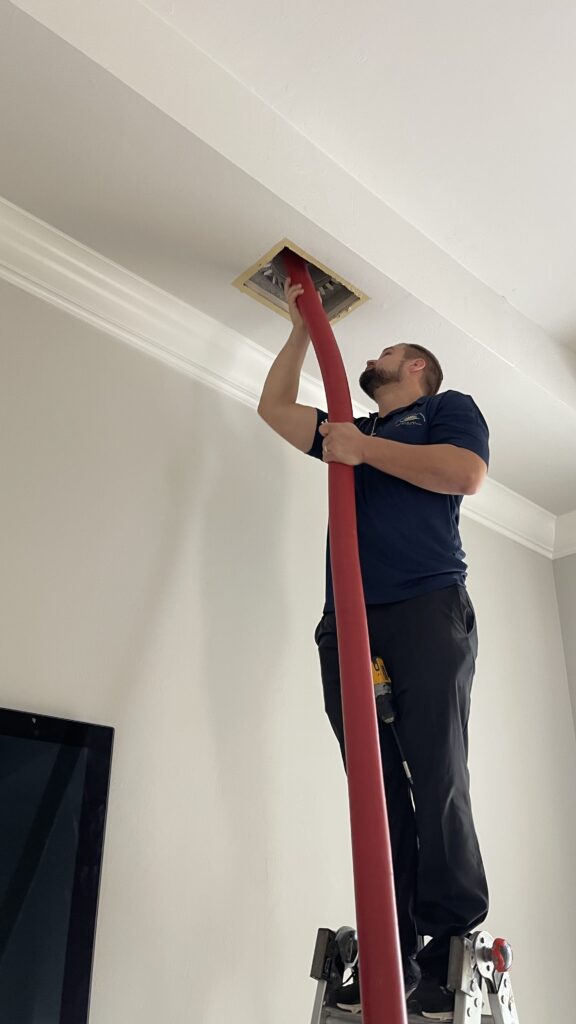
Leaky ducts compound the problem in a big way. Gaps at duct joints and tears in flexible ducting let your expensive cooled air escape into the attic instead of reaching your rooms. Studies show that the average home loses a large share of its conditioned air to duct leaks. That lost air represents money spent cooling your attic rather than your bedrooms. Sealing and insulating the ducts keeps more cool air inside the system and delivers it where it belongs. Dirty ducts also restrict airflow, which weakens the cooling reaching your upper floor. If you want to clear out that buildup, click here for our air duct cleaning service and let our team inspect your system.
Poor duct design is another common culprit in homes with hot upstairs rooms. When a single system serves both floors, the downstairs vents often pull more than their fair share of the cool air. The upstairs ends up starved because the path of least resistance favors the lower level. Improperly sized ducts, missing return vents, and closed dampers all throw the balance off. A professional can measure airflow at each register and find where the system falls short. Correcting these duct issues often brings the fastest relief for an overheated second floor.
How to Fix Upstairs Rooms That Are Hotter Than Downstairs
Once you understand why your upstairs runs hot, you can take steps to even out the temperature. Some fixes are simple and inexpensive, while others call for professional equipment and expertise. The right approach depends on your home’s age, layout, and the condition of your cooling system. In many cases, a combination of small adjustments delivers the best results. The goal is to slow the heat coming in while improving how cool air gets delivered upstairs. Below are the most effective solutions for a hot second floor.
Balancing Your Vents to Cool Upstairs Rooms That Are Hotter Than Downstairs
Balancing your vents redirects more cool air toward the upstairs rooms that need it. Most homes have adjustable dampers in the ductwork or louvers on the registers that control airflow. By partially closing the downstairs vents, you push more conditioned air toward the upper floor. This simple change can shift the balance and ease the temperature gap between levels. Start by closing the downstairs registers about a third of the way and see how the upstairs responds. Make small adjustments over several days rather than slamming everything shut at once. Closing vents too far can raise pressure in the system and strain the blower.
Your thermostat fan setting also plays a role in balancing temperatures between floors. Switching the fan from auto to on keeps air circulating even when the system is not actively cooling. This constant movement mixes the warm upstairs air with the cooler downstairs air and reduces the difference. The fan pulls warm air off the second floor and runs it across the cooling coil before sending it back out. Running the fan continuously uses some extra electricity, yet the comfort gain is often worth it during peak summer. Many homeowners notice a more even feel throughout the home within a day or two. It is one of the easiest changes you can make without spending a dime on equipment.
Professional duct balancing takes this idea much further than do it yourself adjustments. A technician uses airflow meters to measure exactly how much air each room receives. From there, they fine tune the dampers deep inside the duct system to direct the right volume to every room. This precise balancing solves problems that simple register adjustments cannot reach. If your upstairs still feels hot after closing some vents, click here for our air conditioning maintenance service and let our team balance your system. Proper balancing keeps your whole home comfortable without overworking your equipment.
Sealing and Insulating to Cool Upstairs Rooms That Are Hotter Than Downstairs
Sealing air leaks throughout your home keeps hot outdoor air from sneaking inside. Caulk and weatherstripping around windows, doors, and attic hatches close the gaps that feed the stack effect. Sealing these openings stops the constant exchange of cool indoor air for hot outdoor air. The upstairs benefits most, since that is where the stack effect pulls air in and pushes it out. Foam gaskets behind outlet covers and sealed recessed lights add another layer of protection. Each sealed gap reduces the heat load your air conditioner has to fight. The work is affordable and pays for itself through lower energy bills.
Beefing up your attic insulation creates a stronger barrier against radiant heat from above. Most attics in our area benefit from insulation levels of R38 or higher to handle Tennessee summers. Blown in insulation fills gaps and covers the attic floor in an even blanket that slows heat transfer. The thicker the insulation, the less attic heat reaches your upstairs ceilings. Insulating your ductwork in the attic keeps the cool air inside the ducts colder on its journey. Wrapping ducts in proper insulation can recover several degrees of cooling that would otherwise be lost. These upgrades work quietly in the background to keep your second floor comfortable.
Window treatments offer fast relief for rooms that bake in the afternoon sun. Blackout curtains, cellular shades, and reflective film all block solar heat before it enters the room. Closing these on the sunny side of the house during peak hours cuts the heat gain dramatically. Outdoor shade from trees and awnings stops the sun before it ever hits the glass. Light colored roofing and exterior paint reflect more sunlight than darker shades. Combining these sealing and shading steps builds a home that holds onto its cool air far better.
Adding Zoning or a Mini Split to Cool Upstairs Rooms That Are Hotter Than Downstairs
A zoning system divides your home into separate areas with their own thermostats. Motorized dampers in the ductwork open and close to send cool air exactly where it is needed. With zoning, you can set the upstairs cooler than the downstairs and stop fighting one thermostat for the whole house. This approach directly attacks the root of an uneven home. Each zone gets the cooling it actually needs instead of a one size setting for every floor. Zoning works especially well in larger two story homes with big temperature swings. The system pays you back through better comfort and smarter energy use.
A ductless mini split offers another powerful solution for stubborn upstairs heat. This system mounts an indoor unit right in the hot room and connects to an outdoor compressor. Because it skips the ductwork entirely, none of the cool air gets lost in a hot attic. You control the temperature of that single room without touching the rest of the house. Mini splits run quietly and use very little energy compared to running the central system harder. They work beautifully for bonus rooms, converted attics, and bedrooms that never seem to cool down. Ready to cool that hot upstairs room for good? Click here for our mini split installation service.
Upgrading or right sizing your central air conditioner can also solve a hot upstairs. An undersized unit struggles to cool the whole home, and the upstairs loses that battle first. An oversized unit cycles off too quickly to remove humidity and balance temperatures. A properly sized system runs in longer, steadier cycles that reach every corner of the house. A technician can perform a load calculation to find the right capacity for your home. Matching the equipment to the home solves comfort problems that no amount of vent adjusting can fix.
Why You Need a Professional to Fix Upstairs Rooms That Are Hotter Than Downstairs
You can handle some upstairs cooling fixes on your own, yet many require trained eyes and specialized tools. A professional can pinpoint the exact cause instead of leaving you to guess and spend money on the wrong fix. The team at Affordable AC & Service has cooled Tennessee homes for more than 35 years. We measure airflow, inspect ductwork, and test your system to build a plan that fits your home. When the upstairs heat will not quit, expert help gets you comfortable faster and cheaper in the long run.
Schedule AC Maintenance for Upstairs Rooms That Are Hotter Than Downstairs
Regular air conditioning maintenance keeps your system strong enough to cool every floor. Over time, dirty coils, clogged filters, and low refrigerant rob your unit of cooling power. The upstairs feels the loss first, since it sits at the far end of the system. A maintenance visit cleans these parts and restores the airflow your home depends on. Catching small problems early prevents them from growing into expensive breakdowns. A well maintained system simply cools more evenly than a neglected one.
During a tune up, our technicians check the parts that affect upstairs comfort most. We inspect the ducts for leaks, measure airflow at the registers, and verify the refrigerant charge. We also test the blower to make sure it pushes enough air to reach the second floor. These checks reveal hidden issues that quietly leave your upstairs warm. Fixing them during routine service saves you from sweating through another summer.
Scheduling maintenance before the peak of summer gives you the best results. Spring and early summer visits catch problems before the heat truly arrives. A system that gets attention twice a year lasts longer and runs more efficiently. That efficiency shows up as lower energy bills and a more comfortable upstairs. Booking ahead also means you are not waiting in line during the busiest weeks of the season.

Get an Expert Diagnosis for Upstairs Rooms That Are Hotter Than Downstairs
An expert diagnosis takes the guesswork out of a hot upstairs. Our technicians arrive with tools that measure temperature, airflow, and pressure throughout your home. They trace the problem to its true source instead of treating symptoms one at a time. This thorough approach saves you from spending money on fixes that do not solve the real issue. A clear diagnosis points straight to the most effective and affordable solution. You get a comfortable home without wasted effort or expense.
Every home creates its own mix of causes behind an overheated second floor. Yours might stem from leaky ducts, weak insulation, poor balancing, or an aging unit. Our team sorts through these factors and ranks them by impact. We then explain your options in plain language so you can choose with confidence. Free estimates mean you know the cost before any work begins.
A professional diagnosis also catches safety and efficiency problems you might miss. Refrigerant leaks, electrical faults, and failing parts often hide behind a simple comfort complaint. Addressing them protects your family and keeps your system running safely. Our technicians flag these issues during the visit so nothing slips past unnoticed. Acting early turns a small repair into a smart investment in your comfort.
Why Choose Affordable AC & Service for Upstairs Rooms That Are Hotter Than Downstairs
Affordable AC & Service has kept Tennessee families comfortable for more than 35 years. We earned the number one HVAC contract in Meigs County for 2025 through honest work and lasting results. Our technicians treat your home with respect and explain every step in plain terms. We back our repairs with a 5 year labor warranty and our new installations with a 15 year labor warranty. That kind of guarantee shows how much we stand behind our work. You get experience, integrity, and real accountability with every visit.
We make comfort affordable with free estimates on all services and flexible financing options. You never face a surprise bill, since we explain the cost before any work starts. Our 24/7 emergency service means help is ready when the summer heat will not wait. We serve Ten Mile and the surrounding communities with fast, friendly response times. Local roots mean we understand exactly what Tennessee summers demand from your system.
When your upstairs rooms run hotter than downstairs, our team has the tools and know how to fix it. We diagnose the real cause, recommend the right solution, and stand behind the results. From duct sealing to mini split installation, we handle every step under one roof. Reach us at (423) 800-2029 or email info@affordableacservice.com to schedule your visit. Let us make every floor of your home comfortable this summer.