
How to Know If You Need a New Water Heater Before Winter
Water heaters rarely fail on a warm afternoon when the schedule is wide open. They fail in January, in the middle of a cold snap, usually right after the whole family has run back to back showers. Tennessee winters push colder groundwater into the house, and that single change forces the tank to work considerably harder for the same amount of hot water. A unit that seemed perfectly fine in August can start running short in December, which is exactly why fall is the smart time to take an honest look at the equipment sitting in your utility closet. Age, rust, noise, and slow recovery all tell a story, and most homeowners have far more warning than they realize. This guide walks through the signs that point toward replacement, the signs that point toward a simple repair, and the reasons a planned installation beats an emergency one every single time.
Warning Signs You Need a New Water Heater Before Winter
Most water heater failures announce themselves weeks or even months before the tank finally gives out. The trouble is that the signals show up in small ways, like a shower that turns lukewarm a little sooner than it used to, or a faint rust tint in the first cup of hot water each morning. Homeowners get used to those small changes and eventually stop noticing them altogether. Once the incoming water drops twenty degrees in winter, the same tank has to do noticeably more work, and every weakness in the system starts to surface. Checking the unit now gives you time to plan, compare options, and schedule the work around your calendar instead of around a failure. Below are the specific signs our technicians look for during a service call in Ten Mile, Kingston, and the surrounding communities.
Age and Rust Are the Clearest Signs You Need a New Water Heater
A standard tank water heater in East Tennessee lasts somewhere between eight and twelve years, and hard water shortens that range for a great many households. Tankless units run considerably longer, often twenty years or more, because they hold no standing water and the heat exchanger can be descaled on a schedule. You can find the age of your unit on the rating plate, where the serial number usually contains the month and year of manufacture within the first four digits. A tank that was built in 2013 is living on borrowed time no matter how well it seems to be running today. Age alone is not a reason to panic, but it changes the math on every repair decision you make from that point forward. Once a unit crosses the ten year mark, the glass lining inside the steel tank has absorbed a full decade of thermal cycling, and small cracks in that lining expose bare metal directly to hot water. That exposure is where the countdown to a leak genuinely begins.
The sacrificial anode rod is the part that keeps a tank alive, and almost nobody thinks about it until the tank has already failed. It is a length of magnesium or aluminum threaded into the top of the vessel, and it corrodes on purpose so that the steel does not. In areas with hard or aggressive water, that rod can be consumed in as little as three to five years, and once it is gone the tank itself becomes the sacrificial metal. Replacing the rod on a schedule is inexpensive and it genuinely extends tank life, though many homes in our service area have never had it inspected even once. If a technician pulls the rod and finds nothing left but a bare steel wire, the tank has already been corroding internally for quite some time. At that point a fresh rod helps very little, because the damage is inside the vessel where nobody can see it. This is one of the main reasons a tank can look perfectly clean on the outside right up until the day water appears on the floor.
Rust colored water is the sign homeowners notice first, and the pattern of that discoloration matters a great deal. Run only the hot side at a tub or a sink and watch the first several seconds of flow; discoloration that shows up on the hot side alone points squarely at the water heater rather than the supply piping. If both the hot and cold sides run rusty, the problem is more likely galvanized pipe or a well issue that needs an entirely different approach. A metallic taste, a sulfur smell, or fine grit collecting at the faucet aerators often travels alongside the same problem. Once the interior of a tank is rusting, there is no repair that reverses it, and the only real fix is a new unit properly installed. Catching that in October is a very different experience from catching it during a January cold snap with guests in the house. Waiting rarely saves money, and it almost never saves stress. Not sure if your unit needs a repair or a replacement? Click here for our water heater repair service.

Popping Noises and Sediment Are Common Signs You Need a New Water Heater
Minerals dissolved in the water supply drop out of solution when water is heated, and they settle into a hardened layer across the bottom of the tank. East Tennessee water carries a healthy amount of calcium and magnesium, so that layer builds faster here than it does in soft water regions of the country. On a gas unit, the burner sits directly below that sediment bed and has to drive heat through it before the water above ever warms up. The rumbling, popping, or crackling you hear is steam forming in pockets underneath those deposits and violently breaking free. It is not a harmless quirk of an older heater; it is a clear sign that the burner is fighting an insulating layer that should never have been allowed to accumulate. That extra work raises fuel consumption, adds stress to the tank bottom, and can seriously overheat the steel directly above the flame. Over time the glass lining cracks under that stress and corrosion follows close behind.
Noise usually develops gradually, which is precisely why it gets ignored for so long. A tank that ticks quietly at first may progress to a deep rumble that carries through the floor joists of the house. Some units eventually develop a kettling sound, similar to a covered pot about to boil over, and that points to serious scale accumulation inside the vessel. As the sediment bed grows thicker, the usable capacity of the tank shrinks, so a fifty gallon heater may only deliver the hot water you would expect from a forty gallon unit. Families notice this as a shower that runs cold sooner than it should, and they usually blame the length of the showers rather than the equipment. Winter makes the shortfall obvious because the tank starts from much colder water and has far less room to recover between draws. Persistent noise combined with a short hot water supply is a combination worth having inspected well before the holidays arrive.
Flushing a tank once a year keeps sediment from ever establishing itself, and it takes a technician very little time during routine service. The catch is that flushing a tank which has gone eight or ten years without any attention can loosen deposits and reveal a leak at the drain valve that the sediment was effectively plugging. That is not a reason to avoid maintenance; it is a reason to have the work done by someone who can respond immediately if the unit turns out to be at the end of its life. On electric models, heavy sediment can bury the lower heating element, which then burns out repeatedly no matter how many times it gets replaced. A failed dip tube adds to the confusion by dumping incoming cold water at the top of the tank right where the hot outlet sits. Each of these problems has a legitimate fix, but the fixes stack up quickly on an aging unit. When the repairs start repeating themselves, replacement is almost always the better use of your money.
Leaks and Pressure Problems Are Serious Signs You Need a New Water Heater
Not every puddle underneath a water heater means the tank has failed, and knowing that difference saves homeowners real money. Water can come from a loose fitting at the cold inlet or hot outlet, from a failed drain valve at the base, or from the temperature and pressure relief valve mounted on the side or top. Those parts are all replaceable, and a repair makes complete sense when the tank itself is sound and reasonably young. Condensation is also common on gas units during cold weather, especially when the incoming water is very cold and the burner runs through long cycles. What cannot be repaired is a leak coming from the tank seam or from the bottom of the vessel itself. That water is passing through a hole in the steel, and no sealant, weld, or patch is a safe or lasting answer to it. Once the tank is compromised, the only responsible option left is a full replacement.
The temperature and pressure relief valve is a safety device, not a nuisance, and it should never be capped, plugged, or ignored. It is designed to open if the tank reaches roughly 210 degrees or 150 psi, releasing water through a discharge pipe before pressure can build to a genuinely dangerous level. A valve that weeps occasionally often points to thermal expansion within a closed plumbing system rather than a defective valve. Most homes with a backflow preventer or a pressure reducing valve at the meter need a properly charged expansion tank to absorb that pressure safely. Without one, every single heating cycle pushes pressure upward and the relief valve becomes the only place for it to escape. Repeated discharge also stresses the tank shell and every fitting around it. A technician can test static pressure at an outdoor hose bib and tell you quickly which of those problems you are actually dealing with.
Water damage is the truly expensive part of a water heater failure, not the heater itself. A tank in a finished basement, a hallway closet, or an attic space can release forty or more gallons in a matter of minutes when the steel finally opens up. Every unit should sit in a drain pan with a line routed to a safe discharge point, and many older installations across our area never had one included. Freezing weather makes the whole situation worse, because a house without hot water in January is not a house anyone wants to wait around in. Homeowners who spot early moisture and act on it almost always end up with a cleaner and far cheaper outcome. If you see rust staining at the base, flaking metal along the seam, or water that returns after you wipe it up, treat that as urgent. Those tanks do not get better on their own.
How Cold Weather Reveals That You Need a New Water Heater
Winter does not damage a water heater on its own, but it exposes every weakness the unit already had. Groundwater temperature in Tennessee falls steadily through the autumn and reaches its lowest point in late winter, which means the heater must raise water much further to reach the same setpoint. Demand climbs at exactly the same time, since showers run longer, laundry increases, and holiday guests fill the house. A unit that was already slow to recover now falls behind in a way the entire family notices. Utility bills climb, hot water runs short, and the burner or elements cycle far more often than they did back in July. Those three changes together form the clearest real world test of a water heater, and fall is when you still have time to act on the results.
Colder Incoming Water Reveals You Need a New Water Heater
Water heaters are rated by how much they can raise the temperature of incoming water, and that number matters far more in January than it ever does in July. Groundwater around Ten Mile and Kingston can run near seventy degrees in late summer and drop into the mid forties or low fifties by the middle of winter. If your thermostat is set to 120 degrees, the heater is lifting water fifty degrees during summer and closer to seventy five degrees during winter. That works out to roughly fifty percent more energy required for exactly the same shower. A healthy unit absorbs that change without much complaint at all. A tired one, or one that was undersized from the beginning, simply runs out of hot water. The result is the classic winter phone call about a heater that suddenly cannot keep up with the household.
Two numbers describe how a tank performs under real pressure, and homeowners should understand both of them. First hour rating tells you how much hot water the unit can deliver in one hour starting from a full tank, and it combines storage volume with recovery speed. Recovery rate tells you how many gallons per hour the unit can heat at a given temperature rise, and that figure drops as the required rise increases. A forty gallon gas heater that recovers comfortably in mild weather can deliver noticeably less during a hard cold snap. Electric tanks feel this shortfall more sharply than gas units do, because their recovery rate is lower to begin with. Families who added a bathroom, a soaking tub, or a couple of teenagers since the heater was installed are usually working with the wrong numbers entirely. Sizing the replacement around true winter demand is the step that gets skipped most often.
Cold incoming water also changes how alternative systems perform, so the comparison needs to be made honestly. A tankless unit is rated in gallons per minute at a specific temperature rise, and its output falls as the incoming water gets colder. A model that supplies five gallons per minute in September may supply closer to three and a half in February, which is the difference between running two fixtures and running only one. Heat pump water heaters are extremely efficient, though they pull heat from the surrounding air and slow down in an unconditioned space that drops below roughly forty five degrees. In a typical Tennessee garage or basement that is usually workable, but placement and available air volume both matter a great deal. None of this rules those systems out, and many homes in our area are excellent candidates for either one. It simply means the equipment has to be selected for the coldest week of the year rather than the average one.
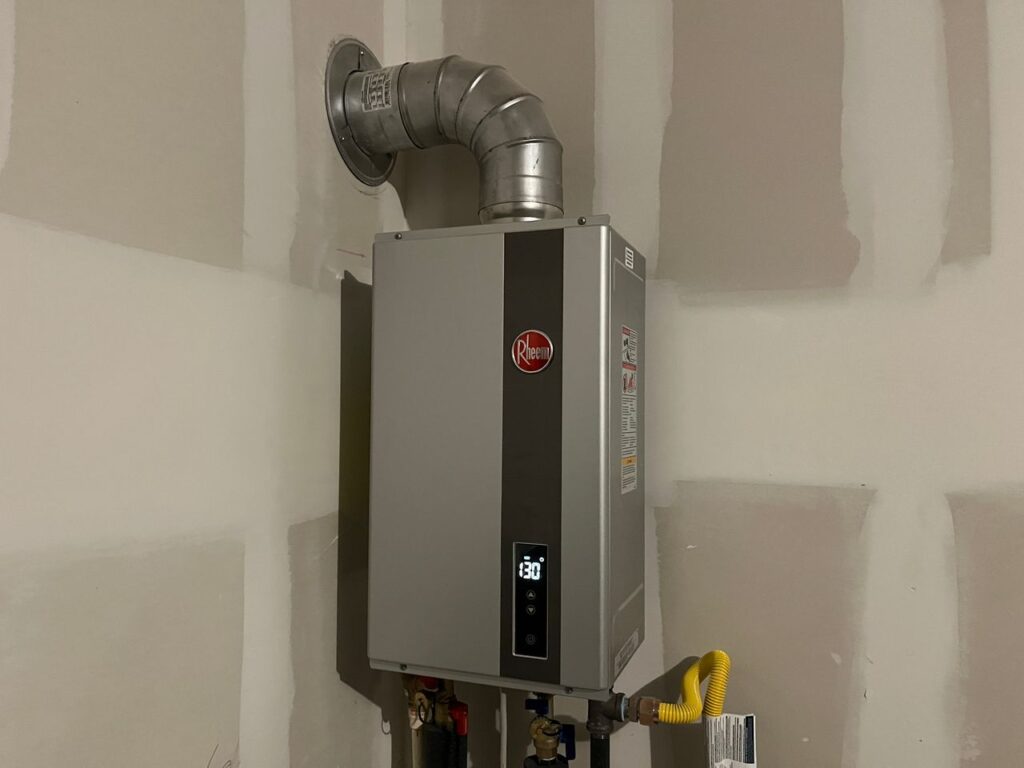
Rising Energy Bills Reveal You Need a New Water Heater
Water heating accounts for close to twenty percent of the average home energy bill, which places it second only to heating and cooling. When that number climbs without any change in household habits, the equipment itself is usually the reason. Sediment buildup, a failing element, a burner that has drifted out of adjustment, or thin tank insulation all push consumption upward quietly. Standby loss is the energy a tank burns simply keeping forty or fifty gallons hot around the clock, and older units surrender far more of it than current models do. A heater sitting in a cold garage or an open crawlspace loses more still. Comparing December bills across two or three consecutive years is a simple way to spot the trend before it gets expensive. If the line keeps climbing while everything else in the house stayed the same, the heater is telling you something important.
Efficiency is measured today with the Uniform Energy Factor, and the spread between old and new equipment is wider than most homeowners expect. A gas tank from the early 2010s might operate near a 0.58 rating, while current models commonly reach 0.64 or better through improved insulation and burner design. Condensing gas units push higher still, and heat pump water heaters can exceed a 3.0 rating because they move existing heat rather than generating it from scratch. Across a ten year service life, that difference shows up as real dollars on the bill every single month. Federal efficiency standards reshaped the design of storage tanks, so newer units also carry thicker insulation and lose considerably less heat overnight. Utility rebates and financing options can close much of the gap in upfront cost. The savings are always largest during the winter months when the heater is working hardest.
Before replacing anything, it is worth confirming the basics, because several adjustments cost nothing at all. A thermostat set to 140 degrees uses meaningfully more energy than one set to 120 degrees, and 120 is the setting most manufacturers and safety agencies recommend for households without specific medical needs. Insulating the first several feet of hot water piping reduces heat loss and shortens the wait at distant fixtures. Fixing a dripping hot faucet stops a slow and constant drain on the tank. If the bill remains high after all of that, the unit itself is the only variable left standing. A technician can measure gas input, check element draw on electric models, and confirm what the equipment is genuinely costing you to operate. That measurement is the entire difference between guessing and knowing.
Repeat Repairs Reveal You Need a New Water Heater
Plenty of water heater problems are absolutely worth fixing, and a good technician will tell you plainly when that is the case. A gas unit that will not stay lit often needs a thermocouple or a flame sensor, and that is a straightforward repair on a tank with years of life remaining. Electric units commonly need a heating element or a thermostat, and a tripped high limit switch sometimes only needs a reset once the underlying cause has been found and corrected. Gas control valves fail, igniters fail, and drain valves fail, and every one of them can be replaced without touching the tank. On a unit that is five years old and otherwise sound, replacing a part is clearly the right financial call. Our repairs also carry a five year labor warranty, which puts real weight behind that recommendation. The calculation begins to change as the tank gets older.
A useful rule is to weigh the cost of the repair against the age and overall condition of the tank. Once a unit is past ten years, a repair that approaches half the price of a new installation rarely pays for itself. The second repair inside a twelve month period is usually the moment homeowners realize they have already spent replacement money in scattered pieces. Corroded fittings, a rusty burner chamber, or a tank that rumbles hard under load all point in the very same direction. There is also the value of coverage; new equipment arrives with manufacturer warranty protection that an aging tank exhausted long ago. Emergency replacement during a holiday week costs more and offers far fewer equipment choices than a planned one. Planning the work is simply the cheapest version of the job.
The right move is to get a straight assessment before the weather forces the decision for you. A technician can check the age, pull the anode rod, test the relief valve, measure incoming pressure, and inspect the burner or elements all in a single visit. That inspection gives you a clear answer instead of a guess, and it costs a fraction of what a January failure costs. If the tank has years left in it, you keep it and address the specific problem. If it does not, you get to choose the equipment, the timing, and the budget entirely on your own terms. Free estimates make that comparison easy to run. Ready to compare your replacement options? Click here for our water heater installation service.
Why You Need a New Water Heater Installed Before Winter Arrives
Replacing a water heater in October is a scheduled appointment; replacing one in January is an emergency. The difference shows up in price, in equipment availability, and in how much of your day the project ends up consuming. Fall installations give you room to compare tank sizes, fuel types, and efficiency ratings without a cold shower forcing your hand. They also give a technician time to correct the things a rushed swap never touches, like a missing expansion tank, an undersized drain pan, or improper venting. Homeowners across Meigs, Roane, Loudon, and Rhea counties book this work every autumn for exactly that reason.
Schedule Your New Water Heater Installation Before Winter Demand Peaks
Demand for water heater work spikes the first week the temperature genuinely drops, and it stays elevated straight through February. Supply houses run short on the most popular sizes, and the unit that fits your space may not be the one sitting on the shelf that afternoon. Booking in the fall means you get the model you actually want rather than the closest available substitute. It also means the installation happens on a normal weekday at a normal rate. Your household never goes a single night without hot water. That peace of mind alone is worth the phone call.
A proper installation involves considerably more than setting a new tank in the old spot. The technician verifies gas line sizing or electrical circuit capacity, checks venting for correct slope and material, installs new connectors and dielectric unions where needed, and confirms the expansion tank pressure matches the house. Combustion air, required clearances, and strapping details all get addressed during the same visit. A drain pan with a properly routed discharge line protects the space surrounding the unit. Those details are exactly what separate an installation that lasts fifteen years from one that causes headaches within three. Rushed emergency work is where they quietly get skipped.
There is also the matter of what happens when a tank fails at the worst possible moment. We answer emergency calls around the clock, and we get families back to hot water quickly when a heater gives out overnight. Even so, the best emergency is always the one that never happens in the first place. A fall inspection and a planned replacement remove that risk entirely. Need help right now instead? Click here for our 24/7 emergency HVAC service.

Choosing the Right New Water Heater Before Winter
Sizing starts with how your household actually uses hot water on the busiest morning of the week. A family of two is usually well served by a forty gallon tank, three or four people often need fifty, and homes with large tubs or several simultaneous users may need sixty five gallons or more. First hour rating is the number to compare closely, since two tanks of identical volume can perform very differently under load. Fuel type matters just as much; gas recovers faster, while electric costs less to install in homes without an existing gas line. Available space, venting paths, and required clearances narrow the list even further. We measure and recommend rather than guess.
Tankless systems appeal to homeowners who never want to run out of hot water, and they deliver on that promise when they are sized correctly. They heat water on demand, occupy a fraction of the space, and commonly last twenty years with annual descaling service. The tradeoffs are a higher upfront cost, a possible gas line upgrade, and dedicated venting requirements. Cold winter groundwater lowers the gallons per minute any unit can produce, so the model has to be chosen around February conditions rather than August ones. For the right house, the long term value is genuinely excellent. For other homes, a quality storage tank remains the smarter investment.
Heat pump water heaters are the current efficiency leader, and the Tennessee climate suits them unusually well. They pull heat from the surrounding air, which means they need adequate space and reasonable ambient temperatures to perform at their best. Installed in a garage, basement, or utility room with sufficient air volume, they can cut water heating costs substantially. They also produce cool and dry air as a byproduct, which many homeowners appreciate in a garage during the summer months. Rebates and financing frequently make the upfront cost far more approachable than it first appears. We walk through the actual numbers honestly so the choice fits both the home and the budget.
Why Choose Affordable AC & Service for Your New Water Heater
We have served Tennessee families for more than thirty five years, and we built this business on straight answers rather than pressure. Our team recommends a repair when a repair is genuinely the right call, and we explain exactly why when replacement makes better sense. Every estimate is free, and the price you approve is the price you pay. We work throughout Meigs County and the surrounding communities, including Kingston, Rockwood, Spring City, Dayton, Decatur, Loudon, Lenoir City, Farragut, Sweetwater, Etowah, Crossville, and Tellico Village. Local means we answer the phone and we show up when we say we will.
Our warranties reflect how we expect our work to hold up over time. Repairs carry a five year labor warranty, and new installations carry a fifteen year labor warranty, which reaches well beyond what most contractors in the region are willing to offer. Financing options are available for homeowners who need to spread the cost of a replacement across a manageable schedule. Emergency service runs twenty four hours a day, seven days a week, holidays included. When a tank fails at midnight, you are not sitting in a cold house waiting until Monday morning.
Fall is the window to handle this without pressure or panic. Call Affordable AC & Service at (423) 800-2029 or email info@affordableacservice.com to schedule a water heater inspection or a free replacement estimate. We are located at 158 Hickory Ln in Ten Mile, and we serve homes across the surrounding counties every day. Our technicians will tell you what your current unit has left in it and what a new one would cost, with no obligation attached either way. Get it handled before the first hard freeze, and hot water goes back to being something you never have to think about.