
Why Your Home Feels Cold Even With the Heat On
Chilly rooms and stubborn cold spots are one of the most common heating complaints we hear once temperatures start dropping across East Tennessee. The thermostat reads 70 degrees, the system is clearly running, and the house still feels like nobody turned the heat on at all. In almost every case, the cause comes down to one of three things: warm air that never reaches the room, heat that escapes the room faster than the system can replace it, or equipment that runs without producing the capacity it was designed to produce. Homeowners often assume the furnace or heat pump has failed completely, when in reality the equipment is working and something in the delivery path is limiting the results. Knowing the difference matters, because a duct repair or a blower cleaning costs a small fraction of a full system replacement. This guide walks through the real reasons your home feels cold with the heat on, the safe checks you can make on your own, and the point where a licensed technician needs to take over the diagnosis.
Common Reasons Your Home Feels Cold Even With the Heat On
A heating system is really two systems working together, and both have to perform for you to feel comfortable. One side produces heat through combustion in a furnace or through refrigerant moving in a heat pump, and the other side moves that heat through ductwork and into your living space. When people say the house feels cold with the heat on, the failure is more often on the delivery side than on the production side. Airflow restrictions, leaking ducts, a struggling blower, and poor insulation all create the same symptom even though they require completely different repairs. Room by room temperature swings tell a different story than a house that is uniformly cool, and a technician uses that pattern to narrow down the cause quickly. The sections below break the problem into the three categories that account for the large majority of service calls we run every fall and winter in Meigs, Roane, Loudon, and Rhea counties.
Airflow Problems That Make Your Home Feel Cold With the Heat On
Restricted airflow is the single most common reason a home feels cold with the heat on, and it usually starts at the air filter. A filter loaded with dust, pet hair, and construction debris acts like a closed door in front of your blower, and the equipment simply cannot pull enough air across the heat exchanger or the indoor coil to move warmth into the house. On a gas furnace, that restriction raises internal temperatures until the high limit switch trips and shuts the burners down early, which is why so many homeowners describe short bursts of heat followed by long cold gaps. On a heat pump, low airflow drives head pressure up and reduces the amount of heat the indoor coil can transfer into your living space, so the supply air feels lukewarm at best. Filters in high traffic homes with pets often need replacement every 30 to 60 days rather than the 90 days printed on the packaging. Using a filter with a very high MERV rating in a system that was never designed for that resistance creates the same problem, even when the filter looks perfectly clean. Checking the filter first costs you nothing and resolves a surprising number of comfort complaints before a technician ever needs to visit.
Blocked and closed registers create the same restriction farther downstream, and they are easy to overlook because furniture arrangements change over the years. A sofa pushed against a supply vent, a rug covering a floor register, or a closet stacked in front of a return grille all reduce the volume of air circulating through your home. Return air matters just as much as supply air, and many homes built in this region were finished with a single central return that cannot pull enough air back when interior doors stay closed. Bedrooms with closed doors and no return path become pressurized, which pushes conditioned air out through gaps in the walls and ceiling instead of letting it circulate. Undercutting doors, adding transfer grilles, or installing dedicated returns solves that pressure imbalance and evens out temperatures between rooms. Balancing dampers in the trunk lines also drift out of adjustment over time, sending too much air to rooms near the equipment and starving the ones at the end of the run. A technician measures static pressure and airflow at each register to find exactly where the imbalance sits rather than guessing.
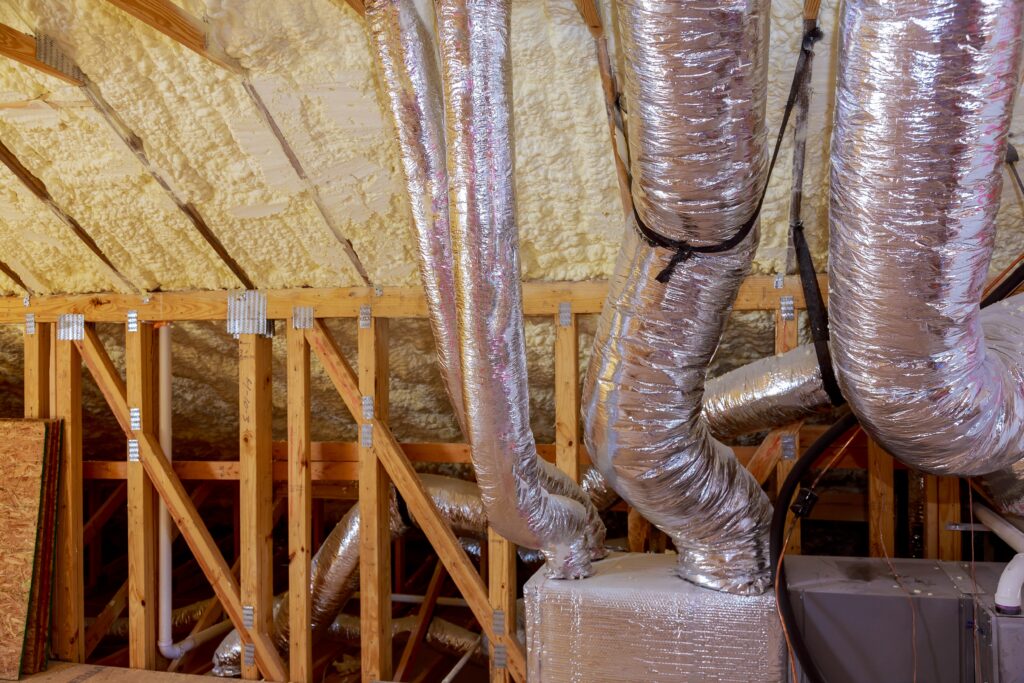
Duct leakage quietly steals a large share of the heat you paid to produce, especially in homes with ductwork routed through crawl spaces, attics, or unconditioned garages. Studies from the Department of Energy have found that typical residential duct systems lose 20 to 30 percent of the air moving through them through gaps, disconnected joints, and failed tape at the seams. That loss shows up on your utility bill and in the rooms farthest from the air handler, which never receive the volume of warm air they were designed to get. Flexible duct that has been crushed behind storage boxes, kinked around a floor joist, or left sagging in long loops adds resistance that further reduces delivery. Insulation on ducts in a crawl space also degrades, falls away from the metal, and lets the surrounding cold air pull heat out of the air stream before it ever reaches you. Sealing accessible joints with mastic and repairing damaged sections often restores comfort dramatically without touching the furnace or heat pump at all. Want cleaner, better performing ductwork throughout your home? Click here for our air duct cleaning service.
Heating Equipment Issues That Leave Your Home Cold With the Heat On
Heat pumps produce comfortable heat in a way that surprises homeowners who moved here from a gas furnace, and that surprise leads to a lot of unnecessary service calls. A properly operating heat pump delivers supply air somewhere in the range of 85 to 95 degrees, which is warmer than your house but cooler than your skin temperature of roughly 98 degrees. Air coming out of a register at 90 degrees genuinely feels cool against your hand even while it is steadily raising the temperature of the room. Heat pumps also run much longer cycles than furnaces by design, because they add heat gradually rather than in short intense blasts. During a defrost cycle, the outdoor unit temporarily reverses into cooling mode to melt frost off the coil, and the indoor auxiliary heat strips fire to offset that. Homeowners who happen to walk past a register during defrost often feel genuinely cold air for a few minutes, which is normal behavior and not a failure. Understanding this normal operation helps you separate an equipment problem from a comfort expectation problem.
Real equipment failures produce different symptoms, and they deserve a professional diagnosis rather than guesswork. A heat pump low on refrigerant loses heating capacity long before it stops running entirely, so the system runs constantly, leans on expensive auxiliary heat strips, and never quite satisfies the thermostat. A failing reversing valve can leave the unit stuck between modes, and a weak compressor moves less refrigerant than the design calls for even though the outdoor fan spins normally. On the gas side, a dirty flame sensor causes the burners to light and then shut down within seconds, a cracked heat exchanger creates a safety hazard that shuts the system down through the limit circuit, and a failing inducer motor prevents the burners from firing at all. Aging equipment also loses efficiency gradually as coils foul, bearings wear, and heat exchangers accumulate soot. A system that heated your home comfortably five winters ago may simply no longer produce the output it once did. Is your heating system running without keeping up? Click here for our furnace repair service.
Equipment sizing and staging play a larger role in comfort than most homeowners realize. A furnace or heat pump that was oversized during installation heats quickly, satisfies the thermostat in a short burst, and shuts off before warm air has circulated evenly through every room in the house. That pattern leaves rooms at the end of the duct run cold while the hallway near the thermostat sits at the target temperature, and it wears out components faster through repeated starts. An undersized system creates the opposite problem, running continuously through cold snaps without ever reaching the setpoint you selected. Single stage equipment moves air at one fixed rate, so it cannot slow down and gently mix air the way variable speed equipment does during mild weather. Modern variable speed blowers and multi stage heating solve much of this by running longer at lower output, which keeps room temperatures far more consistent. Proper sizing depends on a load calculation that accounts for square footage, insulation levels, window area, ceiling height, and duct design rather than a quick rule of thumb.
Home Envelope Problems That Keep Your Home Cold With the Heat On
Your home loses heat continuously through the walls, ceiling, floors, windows, and every gap in the building shell, and the heating system only has to keep up with that loss. When insulation is thin or missing, heat escapes so quickly that the equipment cannot maintain comfortable conditions no matter how well it runs. Attic insulation settles and compresses over decades, and many older homes in Ten Mile, Kingston, and Spring City still carry levels far below the R38 to R60 range recommended for our climate zone. Crawl space floors present another major loss path, and an uninsulated floor over a vented crawl space keeps hardwood and tile uncomfortably cold all winter. Cold surfaces pull radiant heat directly off your body, which is why a room can measure 70 degrees on a thermometer and still feel chilly to anyone sitting near an exterior wall. Adding insulation reduces both the heat loss and that radiant discomfort at the same time. This is often the cheapest comfort improvement available to a homeowner.
Air leakage works alongside poor insulation to make rooms feel drafty and cold even during long heating cycles. Gaps around window frames, door thresholds, recessed lights, plumbing penetrations, and attic hatches allow cold outside air to enter while warm indoor air escapes at the top of the house. The stack effect makes this worse in homes with two levels, because warm air rises and exits through the upper ceiling while cold air gets pulled in through the lower level to replace it. That is why upstairs rooms often overheat while the ground floor stays cold, or the reverse pattern shows up depending on the duct layout. Sealing those leaks with caulk, foam, and weatherstripping reduces the load on your heating system and stops the drafts you feel across your ankles. Single pane windows and old sliding doors radiate cold noticeably, and heavy curtains help considerably when replacement is not in the budget. A blower door test identifies exactly where the largest leaks sit rather than leaving you to guess.
Indoor humidity has a powerful effect on how warm a room feels, and winter air in Tennessee gets very dry. Heating outdoor air that already holds little moisture drives indoor relative humidity down into the teens and twenties in many homes, and dry air pulls moisture off your skin through evaporation. That evaporative cooling makes 70 degrees feel closer to 66 or 67, so people raise the thermostat and still feel cold while their bills climb. Keeping indoor humidity between 30 and 40 percent through the heating season improves comfort noticeably, protects wood floors and furniture, and reduces static electricity throughout the house. A whole home humidifier installed at the air handler manages this automatically and far more effectively than portable units carried from room to room. Dry air also aggravates sinuses, dry skin, and respiratory irritation, so the benefit reaches beyond temperature alone. Balanced humidity often lets homeowners lower the thermostat a degree or two while feeling more comfortable than they did before.
How to Fix a Home That Feels Cold Even With the Heat On
Fixing a cold house starts with a methodical process rather than a parts replacement guess. Some checks are perfectly safe for a homeowner to perform, and doing them first can save you the cost of a service call. Others involve gas pressure, refrigerant, electrical components, and combustion safety, and those belong strictly to a licensed technician with the right instruments. The order matters, because the cheapest and most common causes should always be ruled out before anyone opens a discussion about equipment replacement. A good diagnosis measures airflow, temperature rise across the heat exchanger, static pressure in the ducts, and actual room temperatures rather than relying on impressions. The following sections cover what you can check, what usually needs professional repair, and how to recognize the point where waiting costs you more than calling.
Thermostat Checks for a Home That Feels Cold With the Heat On
The thermostat is the brain of your heating system, and a surprising number of comfort complaints trace directly back to it. Start by confirming the fan setting sits on AUTO rather than ON, because a fan running continuously between heating cycles blows room temperature air across your skin and feels like a draft. Verify that the system is set to HEAT and not to EM HEAT or emergency heat, since emergency heat locks out the heat pump entirely and runs expensive electric resistance strips instead. Check the programmed schedule as well, because setback periods left over from a previous season often drop the temperature during the exact hours you are home. Batteries in battery powered thermostats weaken over time and cause erratic behavior long before the display goes blank. A thermostat that has lost its connection to the equipment through a damaged wire will show a setpoint while nothing responds at the furnace. These checks take a few minutes and require no tools at all.
Thermostat location influences comfort more than most homeowners expect, and a poorly placed unit misreads the entire house. A thermostat mounted on an exterior wall reads colder than the rooms around it and drives the system to overheat the home. One placed in direct sunlight, above a lamp, near a kitchen appliance, or in the path of a supply register reads warmer than reality and shuts the heat off early, which leaves the rest of the house cold. Drafts from an adjacent door or an unsealed wire penetration behind the thermostat plate create the same false reading. Relocating a thermostat to a central interior wall, roughly 52 to 60 inches off the floor and away from vents, usually produces an immediate improvement. Sealing the wire opening behind the mounting plate with a small amount of foam stops cold air from the wall cavity from washing across the sensor. These are small corrections with a large effect on daily comfort.
Homes with distinct hot and cold zones need more than a single thermostat, and that is where zoning systems and ductless equipment earn their keep. A zoning system uses motorized dampers and multiple thermostats to send conditioned air only to the areas calling for it, which stops the upstairs from baking while the downstairs stays cold. Additions, bonus rooms over garages, sunrooms, and finished basements are notoriously difficult to heat from a central system that was never sized to include them. A ductless mini split handles those spaces independently, delivers heat directly into the room without any duct losses, and gives you separate temperature control. Mini splits also operate efficiently in our winter climate and provide cooling in the summer from the same equipment. Adding one unit to a problem room frequently solves a comfort complaint that homeowners fought for years. Have a room that never gets warm enough? Click here for our mini split installation service.
Duct Repairs for a Home That Feels Cold With the Heat On
Duct repair delivers some of the best returns available in home comfort work, and it starts with a full inspection of the system. A technician traces every accessible run through the crawl space, attic, or basement and looks for disconnected boots, separated joints, crushed flexible duct, and insulation that has fallen away from the metal. Failed cloth backed tape is extremely common, because it dries out and releases within a few years of installation despite its name. Mastic sealant brushed over the joints and reinforced with mesh at larger gaps creates a lasting seal that holds up far better than tape. Sections that have been crushed or torn get replaced outright rather than patched, since restricted airflow cannot be repaired with sealant. Once the leaks are closed, the air you paid to heat actually reaches the rooms where you live. Homeowners routinely report warmer back bedrooms and noticeably lower bills after this work.
Duct design problems require more than sealing, and they show up as chronic complaints that no amount of equipment service resolves. Long runs of flexible duct with multiple sharp turns add enormous resistance, and rooms at the end of those runs never receive adequate airflow regardless of how well the furnace performs. Trunk lines that are undersized for the equipment create high static pressure, which shortens blower life and reduces total system output. Return air paths that are too small choke the system from the other direction and cause the same symptoms as a dirty filter. Correcting these issues involves resizing the duct, adding returns, straightening runs, and installing properly adjusted balancing dampers. A technician measures static pressure at multiple points to confirm the system falls within the manufacturer specification. Bringing static pressure into range often improves both comfort and efficiency more than any equipment upgrade would.
Cleanliness inside the duct system affects airflow and air quality together. Years of accumulated dust, insulation fibers, drywall debris from renovations, and pet dander build up along the interior walls and around register boots. That buildup narrows the effective duct diameter and adds resistance the system was never designed to overcome. Homes with a history of moisture intrusion or rodent activity in the crawl space have additional reasons to address the interior of the ductwork. Professional cleaning uses negative pressure equipment and agitation tools to pull debris out rather than pushing it into your living space. Sealing and cleaning are usually performed together, since both require the same access to the same components. The combination restores airflow, improves indoor air quality, and helps your heating system reach every room the way it was designed to.
When to Call a Technician for a Home That Feels Cold With the Heat On
Certain symptoms mean the safe homeowner checks are finished and a licensed technician needs to take over immediately. Any smell of gas near the furnace calls for leaving the home and contacting the gas utility before anyone touches the equipment. Burning odors, scorched insulation smells, or visible soot around the burner compartment indicate a combustion or electrical problem that should not run another cycle. A yellow, lazy, or flickering burner flame instead of a steady blue one points to incomplete combustion, which produces carbon monoxide. A carbon monoxide detector that alarms requires you to ventilate the home, get everyone outside, and call for emergency service without delay. Repeated tripping of the circuit breaker serving the furnace or air handler signals an electrical fault that needs professional attention. These situations involve genuine safety risk rather than simple discomfort.
Performance symptoms also justify a service call long before the system quits entirely. A furnace that lights and shuts down within a minute or two is short cycling, and the underlying cause ranges from a dirty flame sensor to a failing limit switch to serious airflow restriction. A heat pump that runs constantly while auxiliary heat stays energized is burning through electricity at several times the normal rate, and every day you wait adds to the bill. Ice building up on the outdoor unit and refusing to clear after a defrost cycle indicates a defrost control, sensor, or refrigerant problem. Loud grinding, squealing, or rattling from the blower compartment usually means bearings or a motor mount are failing. Water pooling around the indoor unit points to a drainage or coil issue that will spread if ignored. Catching these problems early keeps a repair small.
Timing your call matters as much as making it. The first hard cold snap of the season generates the highest call volume of the year, and equipment that sat unused since spring frequently fails on the day everyone else needs service too. Scheduling a heating tune up in early fall gives a technician the chance to clean the burners, test the heat exchanger, verify gas pressure, check the blower, measure temperature rise, and confirm safety controls before you depend on the system. Small issues found during that visit cost far less to correct than the same failure at midnight in January. Regular maintenance also preserves manufacturer warranty coverage, which most brands condition on documented annual service. Homes with heat pumps benefit even more, since refrigerant charge and defrost operation both need seasonal verification. Ready to get your system checked before winter arrives? Click here for our furnace maintenance service.
Why You Need Professional Help When Your Home Feels Cold With the Heat On
Guessing at the cause of a cold house is expensive, because homeowners frequently replace equipment that was never the problem in the first place. A proper diagnosis uses instruments to measure what is actually happening inside the system, and those measurements point to a specific repair instead of a general suspicion. Combustion analysis, static pressure readings, temperature rise across the heat exchanger, refrigerant pressures, and amperage draw all tell a technician exactly where the failure sits. That level of detail protects your budget and your safety at the same time. It also gives you a clear picture of what the system will need over the next few years, so you can plan rather than react.
Comfort and Safety Benefits of Fixing a Cold Home With the Heat On
Comfort and safety are connected far more closely than most homeowners assume when they call about a cold house. Many of the same conditions that reduce heat output also create combustion risks, because restricted airflow raises temperatures inside a furnace beyond design limits. Repeated overheating stresses the heat exchanger metal until cracks develop, and a cracked heat exchanger can allow carbon monoxide into the air stream that circulates through your bedrooms. Carbon monoxide has no color and no odor, which is why detectors on every level of the home are essential rather than optional. A professional inspection includes a visual and instrument based check of the heat exchanger along with a combustion analysis at the flue. Correcting the airflow problem protects both your comfort and the people living in the house.
Consistent temperatures throughout the home improve daily life in ways that go beyond the thermostat reading. Rooms that stay cold get avoided, which effectively shrinks the usable space in a house you are paying to heat. Cold bedrooms disrupt sleep, cold home offices make working difficult, and cold bathrooms make winter mornings unpleasant for everyone. Fixing the underlying airflow or insulation problem brings those spaces back into use for the entire heating season. Balanced temperatures also reduce the temptation to run space heaters, which carry fire risk and cost far more per unit of heat than central systems do. The improvement is permanent rather than a seasonal workaround.
Reliability improves substantially once the root cause gets corrected instead of masked. Equipment that fights against restricted airflow, leaking ducts, or an oversized load runs longer, cycles more often, and wears out components ahead of schedule. Blower motors, igniters, capacitors, and control boards all fail sooner under those conditions. Removing the stress extends the working life of the system and reduces the number of repairs you face over the years you own it. That reliability matters most during the cold nights when a failure would be hardest to handle. Systems that break down in freezing weather can also lead to frozen pipes and water damage that dwarfs the cost of the original repair.

Energy Savings From Fixing a Home That Feels Cold With the Heat On
Energy waste and cold rooms almost always show up together, because both come from the same underlying failures. Air escaping through duct leaks in a crawl space is heat you purchased and never received, and it appears on your bill every single month of the heating season. Restricted airflow forces the blower to work harder while delivering less, which raises electrical consumption at the same time it lowers comfort. Heat pumps that lean on auxiliary resistance strips because of low refrigerant or poor airflow can easily triple the cost of heating your home. Correcting these problems cuts consumption immediately without any change in how you use the system. The savings continue year after year rather than arriving once.
Maintenance protects efficiency that equipment loses gradually and invisibly. Dirty burners, fouled coils, weak capacitors, and misadjusted gas pressure all pull a system away from its rated performance without producing any obvious symptom at first. Annual service restores those conditions and keeps the equipment operating near the efficiency you paid for when it was installed. Manufacturers rate equipment under clean, properly adjusted conditions, and real world performance drifts from that baseline within a season or two. A tune up costs a small amount compared to the additional fuel and electricity a neglected system consumes. It also catches small failures while they remain inexpensive repairs.
Upgrades make sense once the basics are addressed, and the order matters for your return on investment. Sealing ducts and adding attic insulation reduce the heating load, which means any new equipment can be sized smaller and will run more efficiently. Replacing an aging system before addressing those issues locks you into oversized equipment that cycles poorly for the next 15 years. Modern variable speed heat pumps and high efficiency furnaces deliver excellent results when the home and duct system support them properly. Financing options make these projects manageable, and utility rebates sometimes apply as well. Planning the work in the right sequence gives you better comfort and lower bills than rushing to replace the most visible component.
Why Choose Affordable AC & Service When Your Home Feels Cold With the Heat On
Affordable AC & Service has served Tennessee homeowners for more than 35 years, and that experience shows in how we diagnose comfort problems. We were recognized as the number one HVAC contractor in Meigs County for 2025, and we work throughout the surrounding communities including Kingston, Spring City, Dayton, Decatur, Loudon, Lenoir City, Farragut, Rockwood, Sweetwater, Crossville, Etowah, and Tellico Village. Our technicians measure before they recommend, which means you get a specific answer about your system rather than a sales pitch. Free estimates on all services let you understand your options without any pressure or obligation. We explain what we find in plain language so you can make the decision that fits your home and your budget.
Our warranty coverage reflects the confidence we have in the work our team performs. Every repair carries a 5 year labor warranty, and new installations come with a 15 year labor warranty, which is well beyond what most contractors in this region offer. Financing options are available for larger projects, so a failed system or a needed upgrade does not have to wait. We stand behind the work long after the truck leaves your driveway. That commitment is the reason so much of our business comes from repeat customers and neighbor referrals.
Heating problems rarely wait for business hours, and we answer when they happen. Our 24/7 emergency service covers nights, weekends, and holidays across our entire service area, so a cold house never has to become a dangerous one. Call us at (423) 800-2029 or email info@affordableacservice.com to schedule a visit, and we will get a technician to your door. Our office is located at 158 Hickory Ln, Ten Mile, TN 37880. Need help right now with a heating system that is not keeping up? Click here for our emergency HVAC service.