
How Tankless Water Heaters Compare to Traditional Models
Most homeowners give the water heater no thought at all until the shower turns cold halfway through a rinse. Then the questions start, and the biggest one is almost always the same: should the old storage tank be replaced with another tank, or is a tankless unit the smarter move? The honest answer depends on your gas service, your electrical panel, your venting, and how much hot water your household pulls at the same time. Tankless water heaters fire only when a fixture calls for hot water, so they never burn fuel keeping a stored supply hot through the night. Traditional storage models hold 40 to 80 gallons at temperature around the clock, which makes them simple, affordable to install, and easy for any technician to service. Both designs work well when they are sized properly and installed to code, and both fail early when they are not. Fall is the right time to sort this out, because incoming groundwater temperature drops through the winter and a marginal water heater will show its weakness in January. The sections below break down flow rate, recovery, installation requirements, maintenance, and long term cost so you can compare the two systems on facts instead of guesswork.
How Tankless Water Heaters and Traditional Models Compare on Hot Water Delivery
The single biggest difference between these two systems is how they measure their output. A traditional tank is rated in gallons of storage and a first hour rating, which tells you how much hot water it can deliver in sixty minutes starting from a full, hot tank. A tankless unit is rated in gallons per minute at a specific temperature rise, which tells you how much water it can heat continuously without ever running out. Those two numbers describe very different behavior in a real house, and confusing them is the most common reason people end up unhappy with a new water heater. A tank can be drained; a tankless unit cannot, but it can be outrun. Understanding which limitation matters more in your home is the key to choosing correctly.
Flow Rate and Temperature Rise in Tankless Water Heaters
Tankless water heaters are rated by how many gallons per minute they can raise to a target temperature, and that rating changes with the season. Groundwater entering an East Tennessee home runs roughly 50 to 55 degrees in the winter and closer to 65 to 70 degrees in late summer. If your target is a standard 120 degree output, the unit has to produce a 65 to 70 degree rise in January and only about a 50 degree rise in August. That is why the same tankless water heater that felt endless in July can suddenly feel weak in December, and it is a sizing problem rather than a defect. A large residential gas tankless unit rated near 199,000 BTU will typically deliver somewhere around 5 gallons per minute at a 70 degree rise, and closer to 8 gallons per minute at a lighter rise. Any honest comparison has to use the winter number, because that is the condition the system has to survive.
Putting those numbers against real fixtures makes the math clear. A modern showerhead uses somewhere between 1.8 and 2.5 gallons per minute, a dishwasher pulls about 1 to 1.5 gallons per minute, and a kitchen faucet at full open runs near 2 gallons per minute. Two showers running at the same time in the middle of winter can eat nearly all of a 5 gallon per minute unit before anyone touches the dishwasher. A properly sized tankless system accounts for the fixtures your family actually uses together, not the total number of fixtures in the house. Undersizing shows up as lukewarm water and temperature swings, and no amount of adjusting the control panel will fix it. Oversizing wastes money and can cause short cycling on very low draws. This is why a load calculation matters far more than a sticker on the box.
Tankless water heaters also have a minimum activation flow rate, usually around 0.4 to 0.5 gallons per minute, meaning a trickling faucet will not trigger the burner at all. Some homeowners notice a brief cool slug of water when they turn a tap back on shortly after shutting it off, an effect commonly called the cold water sandwich, which happens because the heat exchanger needs a moment to fire and stabilize. Good installations reduce this with a small buffer tank or a recirculation system that keeps the supply line primed, and many current models include internal recirculation controls for that purpose. Long runs of uninsulated pipe make the wait feel worse regardless of which heater is at the other end. None of these traits make a tankless unit a bad choice; they simply reflect how it works. Ready to size a tankless system for your home the right way? Click here for our water heater installation service.
Tank Capacity and Recovery Time in Traditional Water Heaters
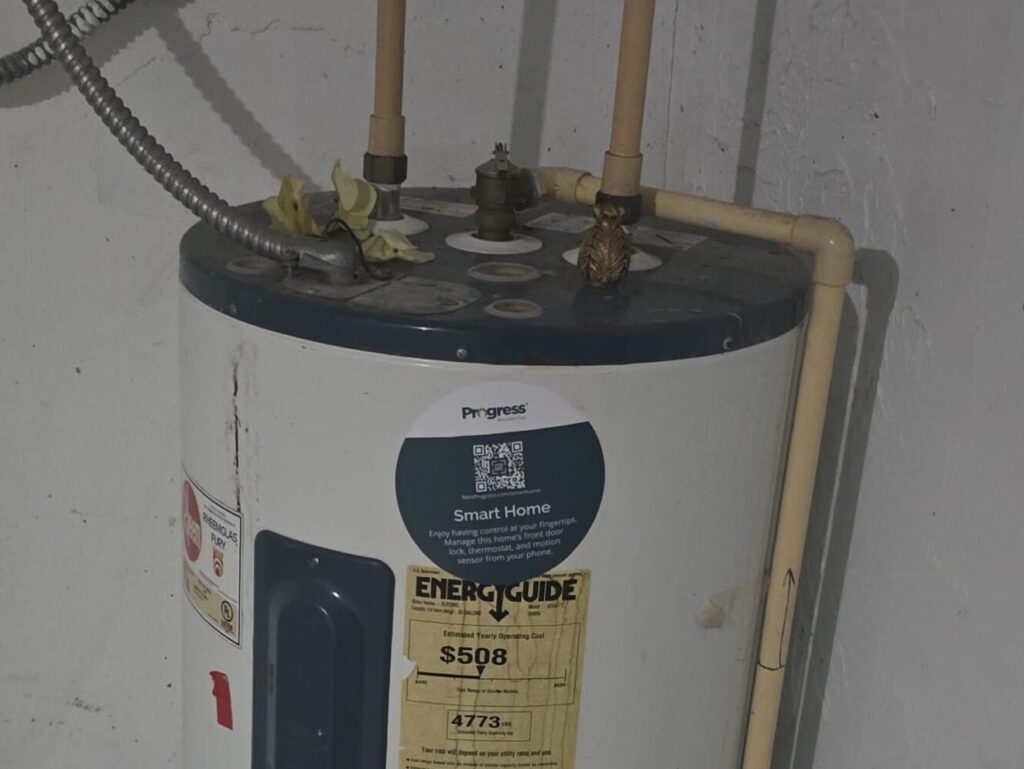
A traditional storage water heater takes the opposite approach by keeping a large volume of water hot and ready. A 50 gallon gas model with a 40,000 BTU burner recovers roughly 40 gallons per hour at a 90 degree rise, which means it refills its usable supply fairly quickly after a heavy draw. Electric models recover much slower, since a standard 4,500 watt element produces about 20 gallons per hour at that same rise. First hour rating combines stored volume with recovery, and it is the number worth comparing between tank models. For a household that showers in a tight window every morning, a strong first hour rating often matters more than raw efficiency. That burst capability is the genuine strength of the storage design, and it is the reason tanks remain the right answer in plenty of homes.
The tradeoff is standby loss, which is simply the heat that escapes through the tank walls and flue while nobody is using hot water. Insulation quality has improved considerably, and current models are far better than units built fifteen years ago, but the loss never reaches zero on a gas fired tank because the flue runs straight through the center of the vessel. Gas storage models generally land in the 0.58 to 0.70 UEF range, while standard electric tanks sit near 0.90 UEF because all of the energy goes directly into the water with no flue. Heat pump water heaters change the picture entirely, reaching UEF ratings above 3.0 by moving heat instead of creating it, though they need adequate air volume and produce cool exhaust air in the space around them. Each design has a place, and the correct pick follows your fuel type and your utility rates. Comparing efficiency ratings across fuel types without comparing operating cost leads people to bad conclusions.
Storage tanks also have service points that tankless units do not. Sediment settles at the bottom of the vessel over time and insulates the burner from the water above it, cutting efficiency and creating the rumbling or popping sound many homeowners describe. A sacrificial anode rod corrodes on purpose so the steel tank lining does not, and once that rod is consumed the tank begins failing from the inside where nobody can see it. A temperature and pressure relief valve protects the vessel from dangerous pressure and needs to be tested periodically. Homes with a pressure reducing valve or a check valve at the meter form a closed system, which requires a thermal expansion tank to absorb the pressure that builds as water heats. Skipping that expansion tank shortens the life of the water heater and stresses every fixture in the house.
Tankless Water Heaters and Traditional Models During Peak Household Demand
Peak demand is where the two designs separate most clearly, and it is worth thinking through honestly before you buy. A tankless water heater never runs out, so a household that spreads its hot water use across the day and evening will essentially never see a limit. A storage tank can absolutely run out, and a 40 gallon unit serving four people with back to back showers will prove it on a cold morning. On the other side, a storage tank can handle a short, very heavy draw that exceeds any single tankless unit’s flow rating, because it is emptying a reservoir rather than heating in real time. Filling a large soaking tub while the washing machine runs is a good example of that scenario. Neither system is universally better; they simply fail in different directions.
Household size and habits usually settle the question faster than any spec sheet. A couple in a smaller home with staggered schedules gets excellent results from a tankless unit and enjoys the space savings from a wall mounted cabinet. A family of five with two teenagers, a large tub, and a laundry routine that never stops may be better served by a high capacity tank, or by a tankless system sized generously with recirculation. Vacation properties and rentals around Watts Bar Lake and Tellico Village often benefit from tankless equipment because those homes sit empty for long stretches with no reason to keep 50 gallons hot. Guest suites, shops, and additions far from the main heater are good candidates for a small point of use unit rather than a longer pipe run. Real usage patterns should drive the decision every time.
One practical detail catches many homeowners off guard during storm season. Gas tankless water heaters require electricity for their ignition, controls, and vent fan, so a power outage stops hot water production immediately. A conventional atmospheric tank with a standing pilot will keep its stored water hot through an outage, and even a tank with electronic ignition holds whatever heat is already in the vessel. For homes in Meigs, Rhea, and Roane counties that lose power during winter storms, that difference is worth weighing. A generator or a battery backup on the water heater circuit solves the problem cleanly. It is a small consideration, but small considerations are exactly what people wish they had known afterward.
Installation, Maintenance, and Lifespan Differences Between Tankless and Traditional Water Heaters
Comparing sticker prices between a tankless water heater and a traditional model tells you almost nothing useful, because the equipment cost is only part of the picture. Tankless installations frequently require gas line upgrades, new venting, condensate handling, and electrical work that a simple tank swap never touches. Traditional replacements are usually faster and cheaper on day one, especially when the new unit matches the footprint and connections of the old one. The gap narrows over time as efficiency and lifespan work in favor of the tankless system, but the payback period varies widely by household. Maintenance requirements differ too, and neglecting either type shortens its life dramatically. Looking at total cost across fifteen or twenty years gives you a far more accurate comparison than looking at the invoice.
What Tankless Water Heater Installation Requires in an Existing Home
Retrofitting a tankless water heater into a house built for a tank is real work, and any contractor who says otherwise is skipping steps. Gas models demand substantially more input than a tank burner, often 150,000 to 199,000 BTU compared to 40,000, so the existing gas line frequently has to be upsized to 3/4 inch or larger based on total pipe length and the load of every other gas appliance in the home. The gas meter itself sometimes needs to be upgraded by the utility to supply that demand. Venting has to be replaced as well, since a tankless unit cannot share a chimney with an atmospheric appliance. Condensing models vent through PVC or polypropylene and produce acidic condensate that must be drained and often neutralized, while non condensing models require stainless steel category III vent pipe. Every one of those items is a code requirement rather than an upsell.
Electric tankless water heaters look attractive at first because the equipment costs less, but the electrical demand is where most projects stop. A whole home electric tankless unit sized for a Tennessee winter can require 27 kW or more, which translates to roughly 112 amps of dedicated draw across multiple double pole breakers. Most homes with a 150 or 200 amp service simply cannot support that alongside an air handler, a range, and a dryer, and a service upgrade adds significant cost. Electric tankless models do make excellent sense for a single fixture, a shop sink, or a bathroom addition far from the main system. Matching the technology to the application keeps the project sensible. A load calculation on the panel should happen before anyone orders equipment.
A traditional tank replacement is a much simpler job in most cases, which is exactly why it stays popular. The technician drains the old unit, disconnects it, sets the new one, connects water and gas or power, installs a new drain pan and shutoff, verifies venting, adds an expansion tank if the system requires one, and tests operation. Code updates since the original installation sometimes require added work, such as seismic strapping in certain jurisdictions, a properly terminated relief valve discharge line, or elevated mounting in a garage setting. Modern tanks are also physically taller and wider than older units because of added insulation, so a tight closet occasionally needs modification. Even with those items, a tank swap usually finishes in a single visit. That speed and predictability carry real value when a heater fails without warning.
Yearly Maintenance for Tankless Water Heaters and Traditional Water Heaters
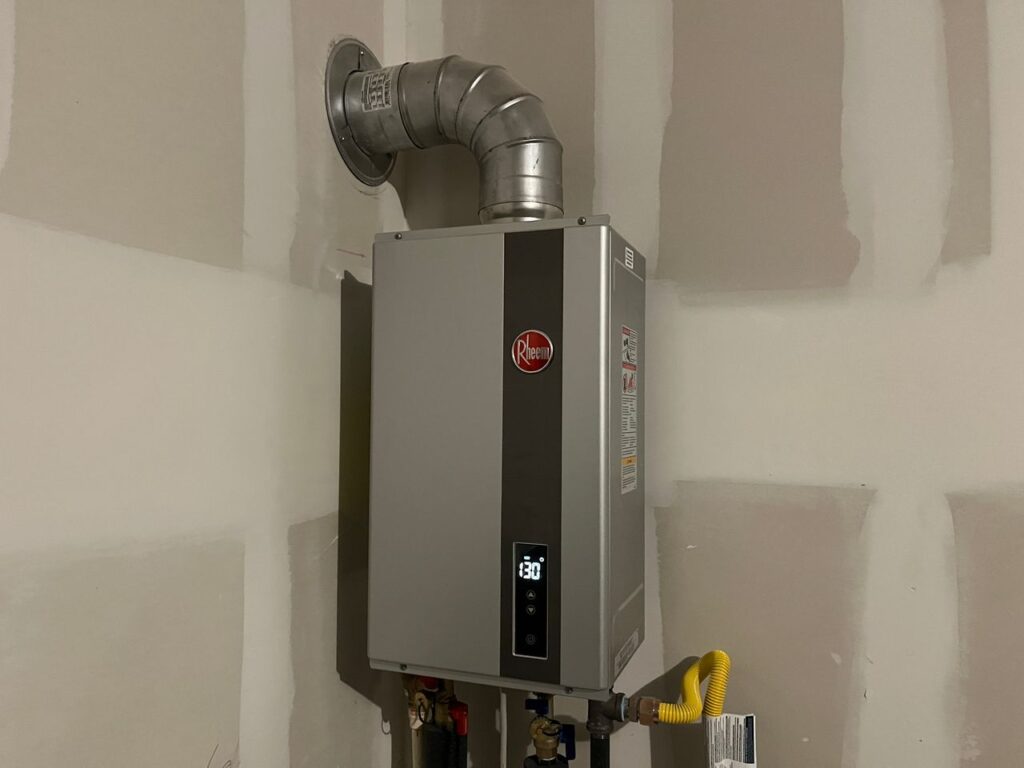
Tankless water heaters need annual descaling, and skipping it is the fastest way to void a warranty and ruin a heat exchanger. Much of East Tennessee sits on limestone, so hard water is common and mineral scale builds inside the narrow passages of the exchanger where water is heated fastest. The service involves circulating a descaling solution through the unit using isolation valves, which a good installer includes at the time of installation. The inlet water filter screen gets cleaned during the same visit, the vent is inspected, the burner and flame sensor are checked, and error history stored in the control board is reviewed. A unit that has been flushed every year will run for decades; one that has never been flushed can start losing output in five. Homes with especially hard water benefit from a whole house softener or a scale reduction system ahead of the heater.
Traditional tanks need attention too, though it looks different. Sediment should be flushed from the bottom of the tank annually so the burner is not fighting through a layer of mineral deposits. The anode rod should be inspected around the third year and replaced when it is consumed, since a fresh rod can add years to the life of the vessel. The temperature and pressure relief valve gets tested, the thermostat setting is confirmed at a safe and efficient 120 degrees, the drain pan and connections are checked for corrosion, and the venting is inspected for backdrafting or rust. Gas burner assemblies collect dust and lint, especially in laundry rooms and garages, and a clean burner runs safer and hotter. None of this takes long, and all of it prevents the failure that floods a floor.
Watch for the warning signs between service visits regardless of which system you own. Rust colored water, a rumbling or popping tank, water pooling near the base, a pilot that refuses to stay lit, fluctuating temperatures, or a tankless error code all mean something is wrong. A slow leak at a fitting is a cheap fix; a leaking tank seam is a replacement, because the vessel itself has corroded through. Catching a problem early is almost always the difference between a service call and a flooded utility room. Noticing lukewarm water, strange noises, or a leak at your unit? Click here for our water heater repair service.
Lifespan, Warranty, and Energy Savings of Tankless Water Heaters
Expected lifespan is where tankless water heaters build their strongest case. A well maintained tankless unit commonly runs 20 years or more, and its heat exchanger, valves, and control board are all replaceable components rather than a sealed vessel. A traditional storage tank typically lasts 8 to 12 years, and once the lining fails there is nothing to repair. That difference means many homeowners buy two tanks in the time they would own one tankless system, and installation labor comes with each of those replacements. Manufacturer warranties reflect the gap, with tankless heat exchangers often covered for 12 to 15 years against 6 to 12 years on a tank. Longevity is a legitimate part of the cost comparison and should not be left out of it.
Energy savings depend heavily on how much hot water your household uses. The Department of Energy has found that homes using around 41 gallons per day can be roughly 24 to 34 percent more energy efficient with a tankless unit, while homes using around 86 gallons per day see closer to an 8 to 14 percent gain. Lower usage households benefit most because they eliminate the largest share of standby loss relative to their total consumption. A condensing gas tankless model reaching 0.93 to 0.96 UEF against an older 0.58 UEF tank produces a noticeable difference on a monthly gas bill. Actual dollar savings track your local rates and your family’s habits more than any published percentage. Anyone promising an exact payback period without looking at your bills is guessing.
Space and installation flexibility round out the comparison. A tankless unit mounts on a wall and takes up roughly the footprint of a carry on suitcase, freeing a closet, a corner of the garage, or usable square footage in a smaller home. Many models can be installed outdoors in a climate like ours with proper freeze protection, which opens up options in homes with no good interior location. A tank needs floor space, clearance, and a drain pan, and it puts several hundred pounds of water on that floor when full. Resale value tends to follow visible upgrades, and a modern tankless system is a selling point in listings across Lenoir City, Kingston, and Loudon. Those benefits are real, though they should support the decision rather than drive it.
Why You Need a Professional Water Heater Comparison Before You Replace
Choosing between a tankless water heater and a traditional model is not a decision that should be made from a big box aisle or a website calculator. The right answer comes out of your actual gas line capacity, panel capacity, vent routing, water hardness, fixture count, and daily usage. A licensed technician can measure all of that in a single visit and give you a clear side by side comparison with real numbers attached. That visit also uncovers the problems that a simple swap would leave behind, such as a missing expansion tank, an undersized gas line, or a vent that has been backdrafting for years. Getting the assessment right protects both your budget and your home. Affordable AC & Service provides free estimates on every water heater project, so the comparison costs you nothing.
How a Professional Water Heater Load Calculation Protects Your Investment
A proper water heater assessment starts with how your household actually uses hot water rather than how many bathrooms you have. We look at peak simultaneous demand, count the fixtures likely to run together, and measure the temperature rise required in the coldest part of the year. From there we check the gas line size and total appliance load, confirm the venting path, and evaluate the electrical service if an electric or heat pump model is on the table. Water hardness gets tested because it drives maintenance intervals and equipment selection. Every one of those data points changes the recommendation.
The calculation prevents the two most expensive mistakes in this category. Undersizing leaves you with lukewarm showers on the coldest mornings and no practical fix short of replacing the equipment again. Oversizing costs money up front and can create short cycling that wears components early. Correct sizing lands the system in the range where it operates efficiently and lasts as long as it should. It is a small amount of time spent that pays for itself over the life of the equipment.
We also lay out what each option actually costs installed, including any gas, venting, condensate, or electrical work required. Financing options are available, which helps when a tankless upgrade makes long term sense but the up front number is a hurdle. You get the tradeoffs in plain language, with no pressure toward the more expensive system. Some homes are clearly better off with a quality tank, and we say so. Ready for a free estimate and a straight comparison for your home? Click here for our water heater installation service.
When Water Heater Repair Makes More Sense Than Replacement
Not every hot water problem calls for new equipment, and a good contractor tells you that before writing a quote. A failed thermocouple, a bad gas control valve, a burned out heating element, a faulty thermostat, or a stuck relief valve are all repairs, and they are often inexpensive ones. Tankless units frequently throw error codes tied to scale buildup, a clogged inlet screen, an ignition fault, or a blocked vent, and every one of those is correctable. Age and repair cost together determine the smart call. A five year old unit with a failed component is worth fixing.
The clear replacement signals are easier to read than most people expect. Water leaking from the body of a storage tank means the vessel has corroded through and no repair will help. Rust colored hot water, a heater past the twelve year mark, repeated repairs in a short window, or a unit that can no longer keep up with the household all point the same direction. Planning that replacement on your schedule is far better than handling it after a failure on a Sunday night. Fall is a good window because winter groundwater temperatures put the most strain on any water heater.
When a failure does happen without warning, response time matters because standing water damages flooring, drywall, and everything stored nearby. Shut off the water supply at the valve above the unit and cut power or gas to it, then call for service. We offer 24/7 emergency service throughout our coverage area for exactly these situations. Dealing with a water heater failure right now? Click here for our emergency HVAC service.
Why Choose Affordable AC & Service for Your Water Heater Installation
Affordable AC & Service has served Tennessee homeowners for more than 35 years, and that experience shows up in the details of a water heater installation. We back our repairs with a 5 year labor warranty and our new installations with a 15 year labor warranty, which is well beyond what most contractors in this region are willing to stand behind. Every estimate is free, and financing options are available on both tankless and traditional systems. We were recognized as the number one HVAC contractor in Meigs County for 2025. That reputation comes from doing the work correctly the first time.
Our technicians install and service both tankless and storage water heaters, so the recommendation you get is based on your home rather than on the product we happen to carry. We handle the gas line sizing, venting, condensate routing, expansion tanks, and permits that a complete installation requires. Old equipment gets hauled away, the work area gets cleaned up, and we walk you through the maintenance your new system needs. Annual service is available so the warranty stays intact and the unit performs the way it should. Straight answers and clean work are the standard here.
We serve homeowners across Ten Mile, Kingston, Spring City, Dayton, Decatur, Rockwood, Sweetwater, Loudon, Lenoir City, Farragut, Crossville, Etowah, and Tellico Village. Call (423) 800 2029 or email info@affordableacservice.com to schedule your free water heater estimate. Our office is located at 158 Hickory Ln, Ten Mile, TN 37880. Emergency service is available around the clock, every day of the year. Let us help you get the hot water question settled before winter arrives.