
How to Tell If Your Ductwork Is Leaking Air
Your ductwork carries cooled air from your air conditioner to every room in your home, and when it leaks, you pay for comfort you never receive. Industry testing shows that a typical duct system loses around 20 to 30 percent of the air moving through it because of holes, loose joints, and gaps at the connections. That lost air escapes into your attic, crawlspace, or wall cavities instead of reaching your living areas. As a result, your air conditioner runs longer, your bills climb, and certain rooms never feel as cool as you want them to. Most homeowners in Ten Mile and across Meigs County have no idea their ducts are leaking because the damage hides inside ceilings, attics, and tight crawlspaces. The good news is that the warning signs are easy to spot once you know what to look for. This guide walks you through the clearest symptoms, simple tests you can do at home, and the point where a professional inspection makes sense. By the end, you will know how to tell if your ductwork is leaking air and what to do about it before the next high bill arrives.
Common Signs Your Ductwork Is Leaking Air
Leaky ducts rarely announce themselves with an obvious sound or a dramatic failure, so you have to read the smaller clues your home gives you. The most reliable signs show up in your energy bills, your room temperatures, and the amount of dust floating through your house. Each of these symptoms ties directly back to conditioned air escaping before it reaches the supply registers in your rooms. When you understand why these symptoms happen, you can connect them to duct leaks instead of blaming the air conditioner itself. Many homeowners replace a perfectly good system because they never realized the ducts were the real problem. Pay close attention to the three signs below, because together they paint a clear picture of a duct system that needs sealing. Spotting them early protects your wallet and keeps your home comfortable through the hot Tennessee summer.
Higher Energy Bills Point to Ductwork Leaking Air
A sudden or steady climb in your cooling costs is one of the first signals that your ductwork is leaking air. When conditioned air slips out through gaps in the ducts, your air conditioner has to run longer cycles to reach the temperature on your thermostat. Those longer cycles burn more electricity, and the difference shows up clearly on your monthly bill. Compare this summer to the same months last year, because a jump without any change in your habits is a strong warning sign. Leaks in attic ducts are especially expensive, since the air escapes into a space that often sits above 120 degrees. The hotter the leak location, the harder your system fights to keep up, and the more money disappears. You may also notice the system almost never shuts off during the hottest part of the afternoon. If your bills keep rising while your comfort keeps dropping, leaking ducts deserve the blame far more often than the air conditioner itself.
Rising bills also tend to creep up slowly, which makes the problem easy to ignore until it becomes severe. Small gaps widen over time as tape dries out, mastic cracks, and joints loosen from years of expansion and contraction. What started as a five percent loss can grow into a twenty or thirty percent loss within a few seasons. That kind of waste adds up to real dollars across the long cooling months we see in East Tennessee. Tracking your usage gives you a baseline, and any unexplained spike should push you to inspect the duct system. Smart thermostats and utility apps make this tracking easier than ever, since they chart your daily consumption. When the chart climbs and the weather has not changed, your ducts are the most likely culprit. Catching the trend early saves you from paying for cooling that never enters your rooms.
There is also a hidden cost that goes beyond the monthly bill, and that is the strain on the equipment itself. An air conditioner forced to run constantly wears out its compressor, blower motor, and other parts much faster than one that cycles normally. Sealing your ducts reduces that runtime and extends the working life of your whole system. This is why pairing duct repair with regular tune ups protects your investment so well. Need to keep your system running at peak efficiency this summer? Click here for our air conditioning maintenance service. A well sealed and well maintained system uses less energy, breaks down less often, and lasts more years. The savings show up on your bill and in fewer repair calls down the road. When you address leaks and maintenance together, you stop paying twice for the same comfort.
Uneven Room Temperatures Reveal Ductwork Leaking Air
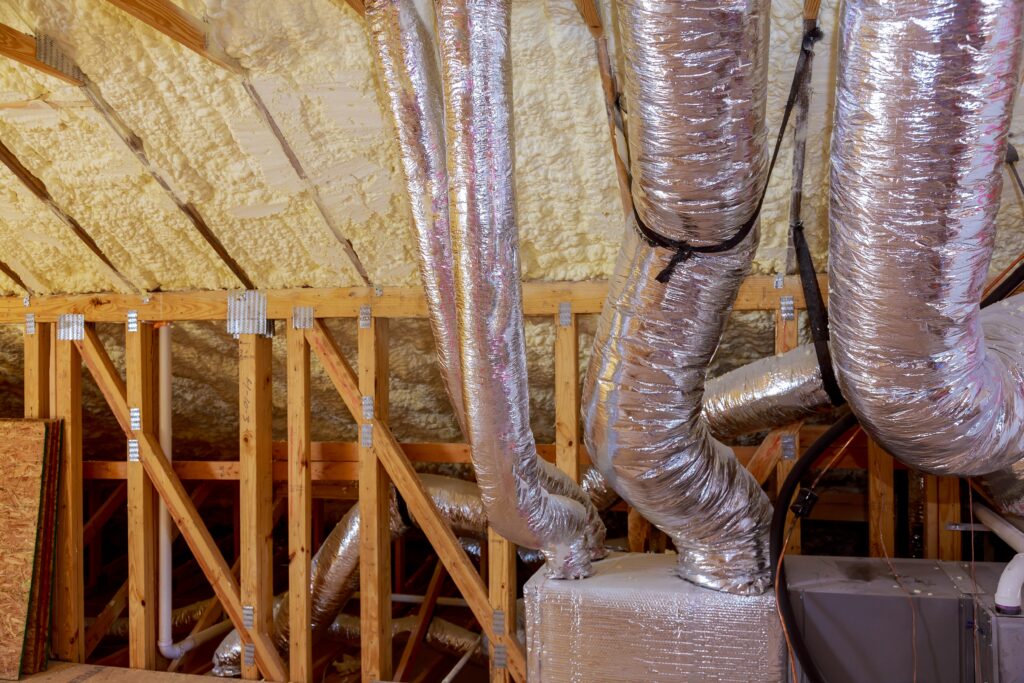
Rooms that never match the rest of the house are a classic symptom of ductwork leaking air. One bedroom stays warm while the living room feels perfect, and no thermostat adjustment seems to fix the difference. This happens because a leak somewhere along the duct run robs the far rooms of the airflow they need. The branch that feeds an upstairs bedroom, for example, may lose most of its cool air through a disconnected joint in the attic. By the time the remaining air reaches the register, it is too little to make a difference. You can feel this imbalance when you walk from a comfortable room into one that feels stuffy and stale. The farther a room sits from the air handler, the more a leak in that run hurts it. These hot and cold spots frustrate families and often lead to constant thermostat battles.
Two story homes show this problem most clearly because warm air rises and the upper level already fights an uphill battle. When the ducts feeding those upper rooms leak, the second floor becomes nearly impossible to cool. People often respond by cranking the thermostat down, which only makes the rest of the house cold and the bills higher. The real fix is sealing the leaks so each room receives the airflow it was designed to get. Balanced airflow keeps every room within a couple of degrees of the others, which is how a healthy system should perform. A professional can measure airflow at each register to find which runs fall short. Those low readings often lead straight to a hidden leak or a loose connection. Once the duct is sealed, the weak rooms finally start cooling the way they should.
Leaks can also pull unconditioned air into the system through return ducts, which adds another layer to the temperature problem. When a return duct in a hot attic leaks, it sucks in that superheated air and mixes it with the air your system is trying to cool. The blower then pushes a warmer blend into your rooms, so nothing feels as cool as the thermostat promises. This return side leakage is sneaky because it works against you even when the supply ducts seem fine. Crawlspace returns cause the same trouble with damp, musty air during humid Tennessee summers. That extra moisture makes your home feel sticky no matter how low you set the temperature. Sealing both the supply and the return sides restores proper balance and comfort. A thorough inspection always checks both directions, since fixing only half the system leaves half the problem in place.
Dust and Weak Airflow Signal Ductwork Leaking Air
Excess dust throughout your home is a quiet but telling sign that your ductwork is leaking air. When return ducts have gaps, they pull dust, insulation fibers, and debris from attics and crawlspaces straight into your air stream. That junk then blows out of your supply registers and settles on every surface in your house. If you dust the furniture and it looks coated again within a day or two, leaky ducts are a strong suspect. The dust often carries a gray or fibrous look because it comes from attic insulation rather than normal household sources. This is more than an annoyance, since the extra particles clog your filter faster and can worsen allergies. Family members with asthma or sensitivities frequently feel the difference when duct leaks go unaddressed. Cleaner ducts and sealed joints keep that outside debris where it belongs.
Weak airflow at the registers tells a similar story about air escaping before it arrives. Hold your hand in front of a supply vent, and you should feel a steady, firm stream of cool air when the system runs. If the air barely trickles out, a leak upstream is likely bleeding off the pressure that should push it into the room. Disconnected ducts are the worst offenders, since a fully separated joint can dump nearly all of that run’s air into the attic. You might also hear a faint whistling or rushing sound near a gap when the blower kicks on. These airflow problems force the system to work harder while delivering less comfort to you. Weak vents in only certain rooms point to leaks in those specific branches. A professional airflow test confirms exactly where the pressure is being lost.
Poor indoor air quality often rides along with these dust and airflow issues, and it deserves attention on its own. Ducts that pull in attic or crawlspace air can introduce mold spores, pollen, and even pest droppings into your living space. That contaminated air circulates through every room each time the system cycles, which affects the whole family. Sealing the leaks and cleaning the ducts removes that pathway and gives you fresher, healthier air. Want cleaner air and stronger airflow in every room? Click here for our air duct cleaning service. Combining duct sealing with a thorough cleaning gives you the best results for both comfort and health. Your filter lasts longer, your home stays cleaner, and your air feels noticeably fresher. For families who care about indoor air quality, this combination is one of the smartest upgrades available.
How to Find Where Your Ductwork Is Leaking Air
Once you suspect a problem, the next step is locating exactly where your ductwork is leaking air. Some leaks are easy to find with your own eyes, while others hide in spots that demand special tools and training. Starting with a careful visual check costs nothing and often reveals the obvious gaps right away. From there, simple hand and smoke tests help you confirm airflow loss at suspicious joints. For the leaks you cannot reach or measure, a professional inspection finishes the job with accuracy. Knowing how to search in the right order saves you time and helps you decide when to call for help. The three approaches below move from the simplest do it yourself check to the most thorough professional method. Following them in sequence gives you a clear picture of your duct system’s health.
A Visual Inspection to Spot Ductwork Leaking Air
A visual inspection is the easiest first step for spotting ductwork leaking air, and you can start it today. Grab a flashlight and head to the areas where your ducts are exposed, such as the attic, basement, garage, or crawlspace. Look closely at every joint, seam, and connection where one section of duct meets another. Gaps, separated joints, and dangling sections of duct are the most obvious problems you will find. Pay special attention to spots where flexible ducts connect to metal collars, since those joints loosen over time. Old gray cloth tape that has dried, peeled, or fallen off is a giant red flag, because that tape was never meant to last. Crushed or kinked flex ducts also choke airflow and often signal damage at the connections nearby. Write down or photograph every problem area so you can address each one or share it with a technician.
While you inspect, look for dark streaks of dust around joints and seams, since these stains mark spots where air has been escaping. Air carries fine dust as it leaks, and that dust collects right at the edge of the gap over time. Those dirty halos are some of the most reliable visual clues a duct system can give you. Check the connections at the air handler and the main plenum, because leaks there are large and very costly. Inspect the boots behind each register too, since the connection between the duct and the vent often pulls loose. Insulation that looks darkened or compressed near a duct can also hint at a steady air leak underneath. Take your time and move methodically from one section to the next so you do not miss anything. A thorough visual pass alone uncovers a surprising number of leaks in most homes.
Keep in mind that a visual inspection has real limits, and that is important to understand before you rely on it completely. Many ducts run inside walls, ceilings, and floor cavities where you simply cannot see or reach them. Small leaks may not show obvious dust stains, especially in newer systems or low traffic areas. The connections buried deep in tight attic corners are easy to overlook even for careful homeowners. A clean looking duct on the outside can still leak air at a seam you cannot inspect. This is why a visual check is a great starting point rather than a complete answer. Use it to catch the easy problems, then move on to airflow tests for the rest. When the visible ducts look fine but symptoms continue, the hidden runs are usually to blame.

The Hand and Smoke Test for Ductwork Leaking Air
The hand and smoke test gives you a simple way to confirm ductwork leaking air at specific joints. Turn your air conditioner on so the blower is running and pushing air through the system at full strength. Slowly run your hand a few inches along the duct seams, joints, and connections you flagged during your visual check. Where a leak exists, you will feel a clear stream of cool air blowing out against your skin. This works best on supply ducts, since those carry pressurized air that escapes outward through any gap. Move slowly and stay close to the surface, because small leaks produce only a faint draft. Mark each spot where you feel air with a piece of tape so you can find it again. This hands on method confirms the leaks your eyes may have missed.
For leaks too small to feel, a smoke test makes the escaping air visible and easy to trace. Light a stick of incense or use a smoke pencil and hold it near the joints while the system runs. When the smoke reaches a leak, it will dance, scatter, or get sucked toward the gap instead of rising straight up. On supply ducts the smoke blows away from the leak, and on return ducts it pulls toward the leak. This visual reaction pinpoints the exact location of even tiny gaps that your hand cannot detect. Work in a calm space with no fans or drafts so the smoke moves only in response to the ducts. Test the connections at registers, plenums, and branch takeoffs, since those are common trouble spots. The smoke test is cheap, safe, and surprisingly accurate for a do it yourself check.
These home tests are valuable, yet they only cover the ducts you can physically reach. The most damaging leaks often hide in sealed wall and ceiling cavities far from your hands and your smoke. A small handheld test also cannot measure how much air your system is losing overall. You might confirm three leaks and still miss the biggest one buried in the attic. That is the difference between finding some leaks and finding all of them. Professionals use pressurized testing equipment that measures total leakage across the entire system at once. When your tests reveal multiple leaks or your symptoms stay severe, that total measurement matters. Knowing the full scope of the problem helps you decide how much sealing the system really needs.
When to Call a Pro to Confirm Ductwork Leaking Air
There comes a point where calling a professional is the smartest move to confirm ductwork leaking air. If your home shows clear symptoms but your own tests come up short, hidden leaks are the likely reason. Technicians use a tool called a duct blaster, which pressurizes the system and measures exactly how much air escapes. That measurement tells you the precise percentage of leakage, something no hand test can provide. Professionals also carry cameras and sensors that reach into wall cavities and tight attic spaces you cannot access. This equipment finds the leaks responsible for the worst comfort and efficiency problems in your home. A trained eye also recognizes design flaws, undersized returns, and other issues a homeowner would never notice. The result is a complete map of your duct system rather than a partial guess.
A professional inspection saves you from the trial and error that wastes both time and money. Without proper testing, homeowners often seal a few visible gaps and assume the job is done, only to keep paying high bills. A technician confirms which leaks actually matter and which connections need attention first. They also verify the work afterward by retesting the system to prove the leakage dropped. That before and after measurement gives you real proof that your money fixed the problem. Reputable companies document these results so you can see the improvement in plain numbers. This level of confidence is something a flashlight and incense stick simply cannot match. When the stakes include hundreds of dollars in yearly waste, professional confirmation is well worth it.
The right time to call also depends on the bigger picture of your system’s health and your comfort goals. If your ducts are old, your bills are high, and rooms feel uneven, an inspection answers many questions at once. A technician can recommend sealing, repair, or cleaning based on what the tests actually reveal. Need a thorough professional duct cleaning to go along with your sealing? Click here for our air duct cleaning service. Pairing an inspection with cleaning and sealing gives you the most complete fix in a single visit. You walk away knowing your ducts are tight, clean, and delivering the air you pay for. That peace of mind is exactly why professional confirmation makes sense for serious duct problems. When the symptoms add up, a phone call is the fastest path to a real solution.
Why You Need Professional Duct Sealing for Ductwork Leaking Air
Finding leaks is only half the battle, because sealing them correctly is what actually restores your comfort and savings. Professional duct sealing uses the right materials and methods to close gaps so they stay closed for years. The improper materials many homeowners reach for, like common cloth tape, fail within a season or two. Proper sealing pays you back through lower bills, steadier room temperatures, and cleaner indoor air. It also protects your air conditioner from the strain that leaks place on it day after day. For homeowners in Ten Mile and across Meigs County, this kind of repair delivers results you can feel and measure. The sections below explain the comfort gains, the savings, and why Affordable AC & Service is the right team for the job.
The Comfort Benefits of Sealing Ductwork Leaking Air
Sealing ductwork leaking air transforms how every room in your home feels during the hottest months. When the gaps close, each register finally delivers the full stream of cool air it was designed to provide. The hot bedroom that never matched the rest of the house starts cooling evenly with the others. Stuffy upstairs rooms become livable again, and the constant thermostat battles fade away. Your home reaches a steady, balanced temperature that stays consistent from one room to the next. That kind of even comfort is exactly what a healthy duct system should give you. Families notice the difference almost immediately after the sealing is complete.
Sealed ducts also improve the air you breathe by closing off the pathways that pulled in attic and crawlspace contaminants. Dust, pollen, and musty odors no longer sneak into your air stream through gaps in the return ducts. Your filter stays cleaner longer, and the air in your home feels fresher with every cycle. People with allergies and asthma often feel real relief once those contaminant pathways are sealed. The whole house simply feels cleaner and more comfortable after a proper sealing job. Better air quality is one of the most appreciated benefits of this kind of repair.
Comfort also includes the quiet confidence that your system is working the way it should. A sealed duct system runs more smoothly, with steadier airflow and fewer strange noises at the vents. You stop worrying about which rooms will be uncomfortable on the hottest afternoons of the summer. The system cycles normally instead of running endlessly to chase a temperature it cannot reach. That reliability gives you one less thing to think about during a long Tennessee heat wave. Sealing your ducts turns an unpredictable system into one you can finally trust.

The Savings of Repairing Ductwork Leaking Air
Repairing ductwork leaking air puts money back in your pocket month after month through lower energy use. Since a leaky system can waste twenty to thirty percent of its air, sealing it recovers a large share of that loss. Your air conditioner runs shorter cycles, draws less electricity, and stops paying to cool your attic. Those savings show up on every bill for the rest of the cooling season and beyond. Over a full year, the reduced runtime adds up to a meaningful amount on your utility costs. For many homeowners, the repair pays for itself faster than they expect.
The savings reach beyond your monthly bill and into the lifespan of your equipment as well. An air conditioner that no longer runs constantly faces far less wear on its compressor and blower motor. That reduced strain means fewer breakdowns, fewer repair calls, and more years of service from your system. Replacing an air conditioner is a major expense, so extending its life protects a serious investment. Sealing your ducts is a small cost compared to the price of premature equipment failure. This is one of the most cost effective improvements you can make to your home comfort system.
Smart homeowners pair duct repair with regular maintenance to lock in the maximum savings over time. A sealed duct system and a well tuned air conditioner work together to keep efficiency at its peak. Want to protect your savings with a seasonal tune up? Click here for our air conditioning maintenance service. Combining sealing with maintenance keeps both your ducts and your equipment running their best for years. The result is lower bills, fewer surprises, and a system that earns its keep every single month. That long term value is exactly why repairing leaks is such a wise decision.
Why Choose Affordable AC & Service for Ductwork Leaking Air
Affordable AC & Service has served Tennessee homeowners for more than 35 years, and that experience shows in every duct repair we complete. Our technicians know exactly where ducts leak, how to seal them properly, and how to verify the results afterward. We use the correct materials and methods so your repairs hold up for the long haul instead of failing in a season. As the number one HVAC contractor in Meigs County for 2025, we take pride in honest work and lasting results. We treat your home with respect and explain every step so you always understand what we found and what we fixed. That straightforward approach has earned the trust of families across our entire service area.
We back our work with warranties that reflect our confidence in the quality we deliver. Our repairs come with a 5 year labor warranty, and our new installations carry a 15 year labor warranty for real peace of mind. We also offer free estimates on all services, so you know your costs before any work begins. Financing options are available to make larger projects fit comfortably within your budget. When a duct problem turns urgent, our 24/7 emergency HVAC service is ready to respond day or night. Facing an HVAC emergency right now? Click here for our emergency HVAC service.
Choosing Affordable AC & Service means choosing a local team that genuinely cares about your comfort and your trust. We serve Ten Mile, Tellico Village, Sweetwater, Loudon, Kingston, and many more communities throughout the region. You can reach us anytime at (423) 800-2029 or by email at info@affordableacservice.com to schedule your duct inspection. We will find every leak, seal it the right way, and prove the improvement with real results. Our goal is a home that stays cool, comfortable, and efficient through every Tennessee summer. Call us today and let our experienced team put an end to your duct leaks for good.