
Comparing Electric vs Gas Furnaces for Efficiency
As the cool, crisp air of autumn begins to settle over East Tennessee, homeowners in the Ten Mile area start to turn their attention from cooling their homes to the important task of heating them. When it is time to consider a new furnace, you are faced with a fundamental choice between two primary technologies: the traditional gas furnace and the all-electric furnace. While both are effective at providing warmth, they operate on completely different principles and have significant differences in their efficiency and long-term operating costs.
The term “efficiency” itself can be a source of confusion. There is the technical efficiency of the machine, which measures how well it converts its fuel source into usable heat, and then there is the cost efficiency, which is what truly matters for your household budget. Understanding the distinct differences between how gas and electric furnaces work, how their efficiency is measured, and how that translates to real-world costs is the key to making a smart and informed decision that will keep your home warm and your utility bills manageable for many winters to come.
How Each Furnace Creates Heat
The core difference between a gas and an electric furnace lies in the fundamental way they create heat. They are both forced-air systems, meaning they use a blower fan to distribute warm air through your home’s ductwork, but their method of generating that warmth is what sets them apart.
A gas furnace is a true heat generator that operates through a process of combustion. It is connected to a fuel source, which is typically natural gas from a municipal line or liquid propane (LP) from a tank on your property. When your thermostat calls for heat, the furnace opens a gas valve, and an ignitor lights the gas at the burners inside a sealed combustion chamber. This creates intensely hot flames that heat a metal component called a heat exchanger. Your system’s indoor blower fan then pushes air from your home across the hot exterior surfaces of this heat exchanger. The air rapidly warms up and is then circulated through your ducts. The harmful byproducts of this combustion process, such as carbon monoxide, are safely vented to the outside through a flue pipe.

An electric furnace, on the other hand, operates through a process of electric resistance. It works in a way that is very similar to a giant toaster or a powerful hair dryer. When the thermostat calls for heat, a strong electrical current is sent through a series of large heating elements, which are metal coils or strips. These elements are designed to resist the flow of electricity, and this resistance causes them to glow red hot, much like the coils on an electric stove. The blower fan then pushes air across these intensely hot elements, and the warmed air is distributed throughout your home. This process does not involve any combustion and does not produce any exhaust gases.
Ready for a new furnace? Click here to learn more.
Technical Efficiency: The AFUE Rating
When you are comparing the efficiency of different furnace models, the primary metric you will see is the AFUE rating, which stands for Annual Fuel Utilization Efficiency. This rating is represented as a percentage, and it tells you how much of the fuel that the furnace consumes is converted directly into usable heat for your home, versus how much heat is wasted as a byproduct of the process.
An electric furnace is a champion of technical efficiency. Because there is no combustion process and no need for an exhaust vent, virtually no heat is lost. Every single watt of electricity that the furnace consumes is converted directly into heat for your home’s air. This means that an electric furnace has an AFUE rating of 100%. From a purely technical, energy-conversion standpoint, it is a perfectly efficient machine.
The efficiency of gas furnaces can vary more widely. Older, standard-efficiency gas furnaces from a few decades ago could have AFUE ratings as low as 60% to 70%, meaning that a staggering 30 to 40 cents of every dollar you spent on fuel was being wasted as hot exhaust gases going right up the chimney. Modern, high-efficiency condensing gas furnaces, however, are a world apart. These units have an AFUE rating of 90% to as high as 98.5%. They achieve this incredible efficiency by using a second heat exchanger to extract even more heat from the exhaust gases before they are vented outside. If you are only looking at the AFUE number, the electric furnace seems like the clear and obvious winner.
Want to keep costs low? Learn more about our furnace maintenance.
Cost Efficiency: The Real-World Operating Cost
The AFUE rating is a measure of how efficiently a furnace uses its fuel, but it does not tell you anything about the cost of that fuel. This is the most important factor for your household budget and the reason why the 100% efficiency of an electric furnace can be very misleading. The true cost to heat your home depends on the price you pay per unit of energy.
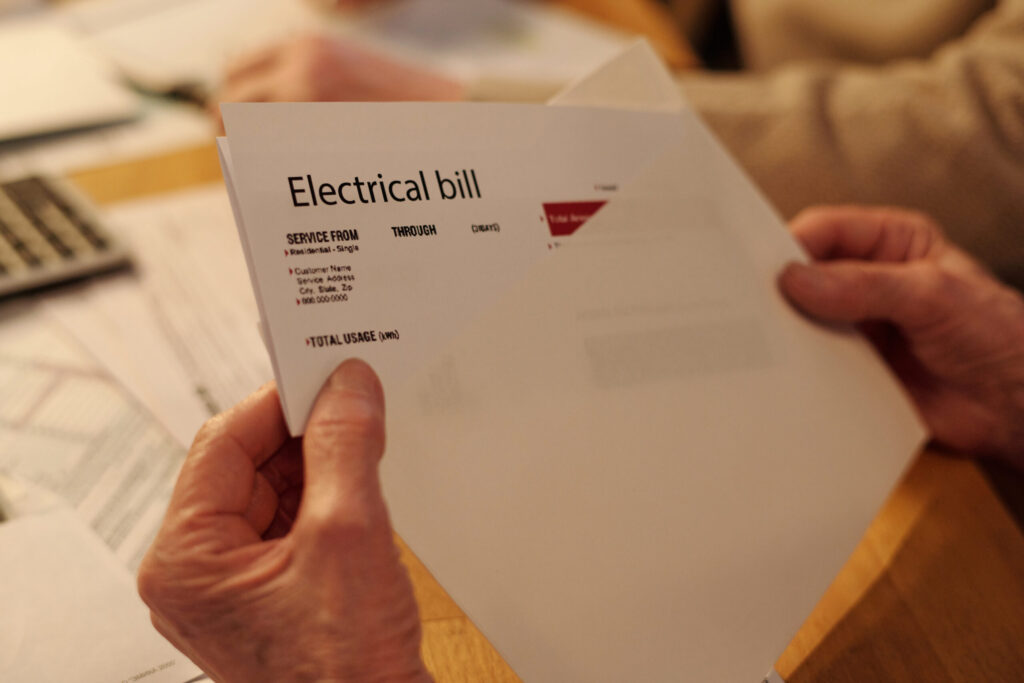
In almost every energy market in the United States, including our region of Tennessee, natural gas is a significantly cheaper fuel source than electricity. While prices can fluctuate, a BTU (British Thermal Unit, the standard measure of heat) of energy produced by burning natural gas costs a fraction of what it costs to produce that same BTU of energy using electricity from the grid.
This is where the calculation changes dramatically. Even though a high-efficiency gas furnace with a 95% AFUE rating “wastes” 5% of its fuel as exhaust, the extremely low cost of that natural gas means that the total cost to heat your home for the winter is almost always much lower than it would be with a 100% efficient electric furnace that is running on much more expensive electricity. For the vast majority of homeowners in the Ten Mile area who have access to a natural gas line, a high-efficiency gas furnace is the more cost-efficient and affordable heating option. An electric furnace is an excellent solution for homes in rural areas that do not have access to natural gas, or as a reliable backup heat source for an electric heat pump system.
Other Important Comparison Factors
Beyond the crucial consideration of operating costs, there are several other factors to weigh when choosing between a gas and an electric furnace.
The upfront installation cost for the equipment itself is often lower for an electric furnace. They are simpler machines with fewer components. However, this can be offset by other factors. If your home is already equipped with a natural gas line, replacing an old gas furnace with a new one is a very straightforward process.
In terms of lifespan and maintenance, electric furnaces often have a slight advantage. Because they do not have a combustion process and have fewer moving parts (no burners, gas valves, or ignitors), they can often have a longer operational life, sometimes lasting 20 to 30 years compared to the 15 to 25 years of a typical gas furnace. Both systems require annual professional maintenance to remain safe and efficient, but a gas furnace requires a more detailed safety inspection of its combustion components and heat exchanger.
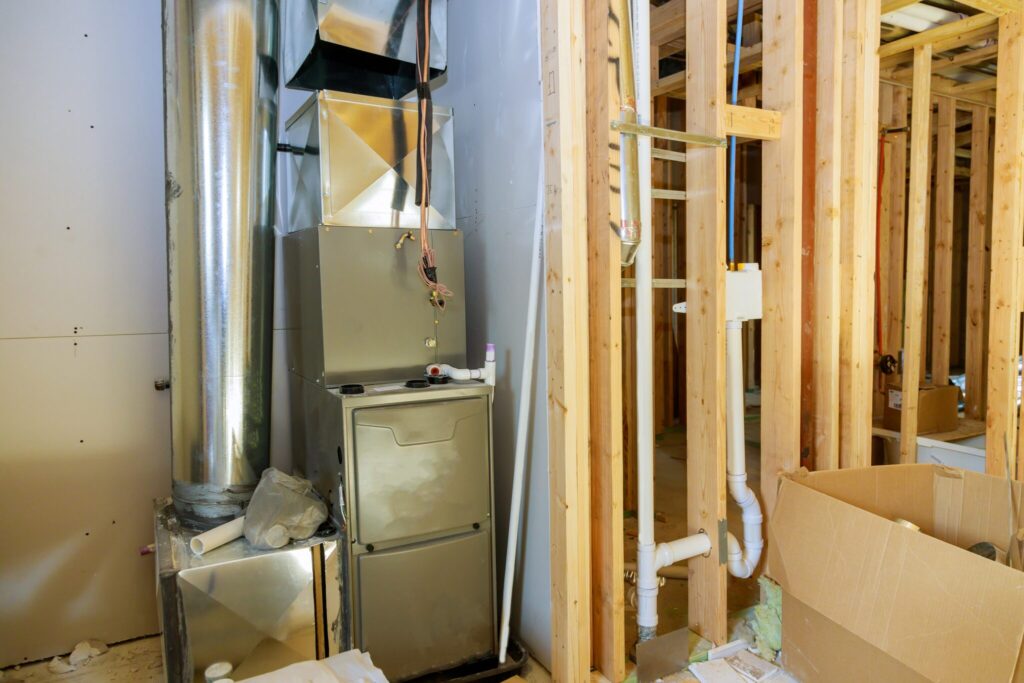
Finally, many homeowners notice a difference in the quality of the heat produced. A gas furnace combusts fuel at a very high temperature, so the air it delivers is intensely hot. This provides a powerful, rapid heating that many people find very comforting. The heat produced by an electric furnace’s resistance coils is less intense, so the air coming from the vents may feel more lukewarm by comparison. This can mean it takes longer for an electric furnace to bring a cold house up to temperature.
The choice between a gas and an electric furnace is a decision that involves a careful balance of technical efficiency and real-world cost efficiency. While an electric furnace may be 100% efficient in its energy conversion, the high cost of electricity often makes a high-efficiency gas furnace the more affordable and practical choice for homeowners in our region. The right decision for your home will ultimately depend on your access to natural gas, your installation budget, and your personal comfort preferences.
Making a major investment in a new furnace requires a clear understanding of all of your options and their long-term financial implications. We encourage you to contact the home comfort experts at Affordable AC and Service. We can provide a thorough assessment of your Ten Mile home, give you a clear and honest comparison of the long-term operating costs of different systems, and help you find the perfect heating solution to keep your family warm and your energy bills affordable.